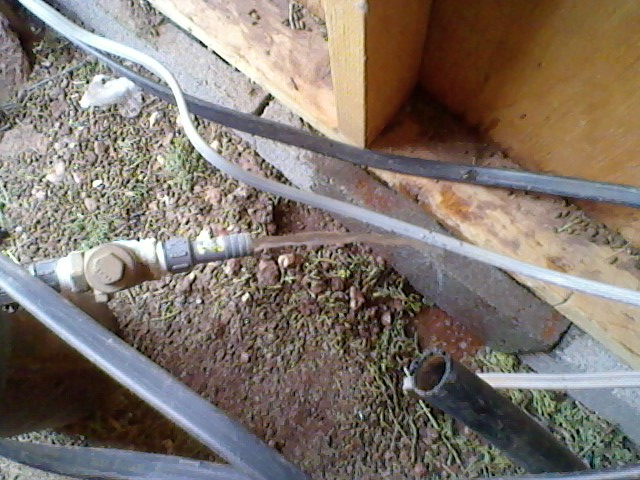
With some good prep work and a big assist from Neighbor D, getting the new pump to its place in the well didn’t take any time at all.
But with this flow rate it’ll still be sometime tomorrow before there’s enough water in the tank for the faucet to be useful again. And before that I want to run the hose into a ditch to get any sediment out of the pipes.
D and I had a look in the tank, and the goop isn’t as deep as it looked. Still needs cleaning this season, but it’s maybe not as urgent as I’d thought.
Got the oven fixed, and now soon I’ll have indoor plumbing back. Starting to feel better about life, I am.
ETA: Yupper. Just came home from evening chicken chores, and checked the tank on the way. It is definitely starting to fill – and at a rate higher than I’ve grown used to, though of course less then three hours at 1 GPM or less isn’t enough to give me running water at the Lair. Tomorrow’s supposed to dawn sunny, so the pump should be running fairly early. Maybe by the afternoon I can clean out the pipes get things working again.










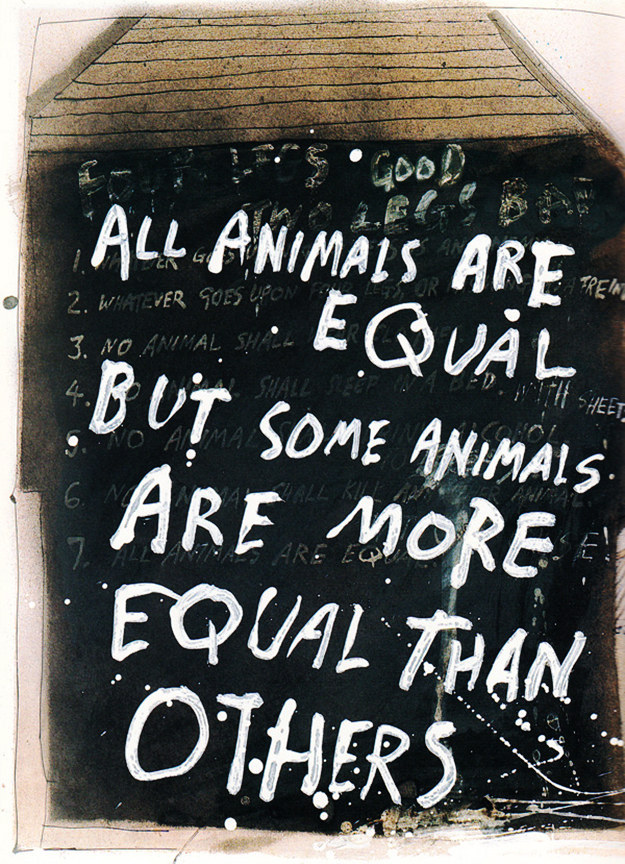




Bravo! That’s very encouraging.
But what next? 🙂
I’m guessing something along these lines.
Several people have brought up the future impact on your water supply from the new cattle well and the increase in the concentrated cattle population. One of them may be an increase in the bacteria and virus content of your well water, especially if you are downslope from the new well and watering hole location. Well depth isn’t a guarantee of water safety. Soil isn’t a dependible filter because you can’t know what the infiltration rate is for all the soil between you and the well/watering tank, how much clay is in the soil, or how much of a bacterial load the soil has. If you get snow or rain there will be a flushing effect that can elevate the bacterial load temporarily. It may be useful to have your water tested regularly once the cattle population increases, or to proactively protect yourself with a bacteria specific point of use water filter, especially for water you drink. It sounds like you’d need a sediment pre-filter or settling container or the water filter will clog quickly. There are very good inexpensive backpacking and POU water filters. A concentrated year ’round large group of cattle gives you a whole new subject matter set to apply your skills to and new subject matter for your next book. Sounds like some really good blog posts coming along in the future. And you thought chickens were a challenge…