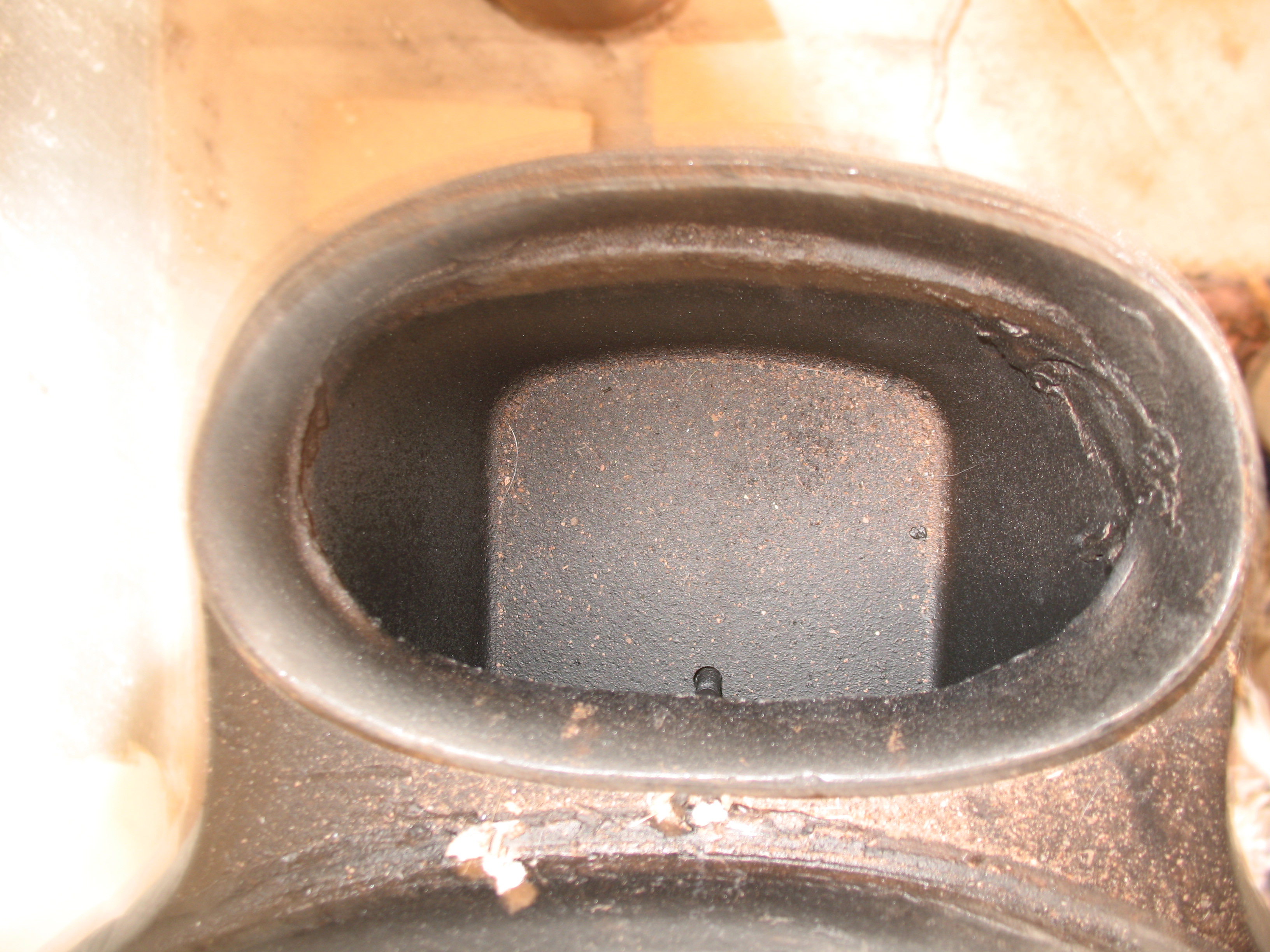
Okay, that is the outlet collar on Landlady’s new potbellied stove. Every source I can find says you fit a round 6″ single-wall stovepipe on it by simply squashing the pipe to fit.
I have tried it with two different pipes and cannot get it to happen. The pipe is never quite big enough. I took tinsnips to an old piece of pipe, making several slits on the edge so I can slide it over the collar and that works … sort of. But it’s ugly and far from gas-tight and can’t possibly be right. I have considered the possibility that maybe a crimped end is supposed to go inside the collar, but that’s not what the instructions say. And anyway I want the big end down, so the smoke says inside where it belongs.
What the hell am I doing wrong?














Hey Joel. First I don’t own a pot bellied stove and have very little knowledge in that area. I looked on line and found this.
http://www.amazon.com/gp/product/B00545D40E?keywords=OVAL%20TO%20ROUND%20STOVE%20PIPE%20ADAPTER&qid=1445975739&ref_=sr_1_2&sr=8-2
It is a black Oval Round Adapter for pot bellied stoves. I hope this helps.
We had a pot bellied stove about 50 years ago. It always leaked a little smoke around the connection between the pipe and the stove. I suspect we didn’t do it right either, but I can’t begin to remember what it looked like. sigh Hope you find the answer.
Crimped end down, use tek screws or sheet metal screws through collar to tighten. Crimped end down allows creosote to flow back into stove instead of down the outsides of flue. Smoke not staying in is a draw/draft issue. Easiest solution is to allow heavy airflow first five minutes or so to get the flue heated up and drawing. If still an issue check flue height, disturbances in flue location, or other environmental air disturbances locally (IE hills, trees etc)
Hope this helps or at least gives you some ideas of a solution. Vogelzang stoves are kinda notorious for needing propietary parts though, fair warning.
You want the crimped end down, inside the collar. Creosote runs down the chimney and you want it to stay inside the pipe and into the stove. Imagine you are pouring water down the chimney, that is how you install chimney pipe.
I have also seen an adapter for stoves like that that have a crimped part surrounded by a collar, kind of a double walled setup just at the base. So the creosote still goes into the fire box but the collar goes around the outside of the stove outlet. I think you need an adapter.
Have you tried an e-mail to the stove maker? Any help on their website?
Earlier commenters are correct- crimp goes inside. The pouring water analogy is a good one. You may need a crimp tool to get the factory crimp ‘small’ enough to fit inside.
Here’s a slightly cheaper adapter. Yeah, as they say, crimp in. Creosote leaking outside bad. If necessary, pick up a little stove cement. Or I’ve heard of people sealing chimney pipe with flour dough; never tried myself.
Darn it, left out the URL:
http://www.truevalue.com/product/Heating-Cooling/Fireplaces-Wood-Stoves/Stove-Pipe-Fittings/Black-Stove-Pipe-Oval-To-Round-Connector-24-Ga-6-In-/pc/7/c/103/sc/2970/60446.uts
Well, if I’m going to crimp the pipe and put it inside the collar, I don’t need no stinking adapter. I already know that can be done. Even have access to a crimper.
I’m an amateur at stove installation though have always been more than decent as a DIY guy. I helped a friend install a similar (may have been the same model for as much as I can remember) stove in his heavily used mountain cabin. We found and used an adapter such as those shown by bear and MJR above along with some fireplace mortar/cement (came in a caulk type tube), and a few tek screws to lock it into place. Worked extremely well and has withstood use and thorough annual cleaning for three years now.
Just my attempt to confirm what the other folks told you above.
What others said above, you really do need the stinking adapter, see comments above, so take the time and spend the money for it and a tube of fireplace cement.
Agree with crimped end down. And I used a black heat rated fireplace caulk to seal my joints to keep the smoke inside too.
You might also need stove sealant cement like this: http://www.efireplacestore.com/cpf-69195.html
Seals stove and pipe to prevent CO2 leaks.
Fire caulk. Seal the gaps. Make airtight. Much good.