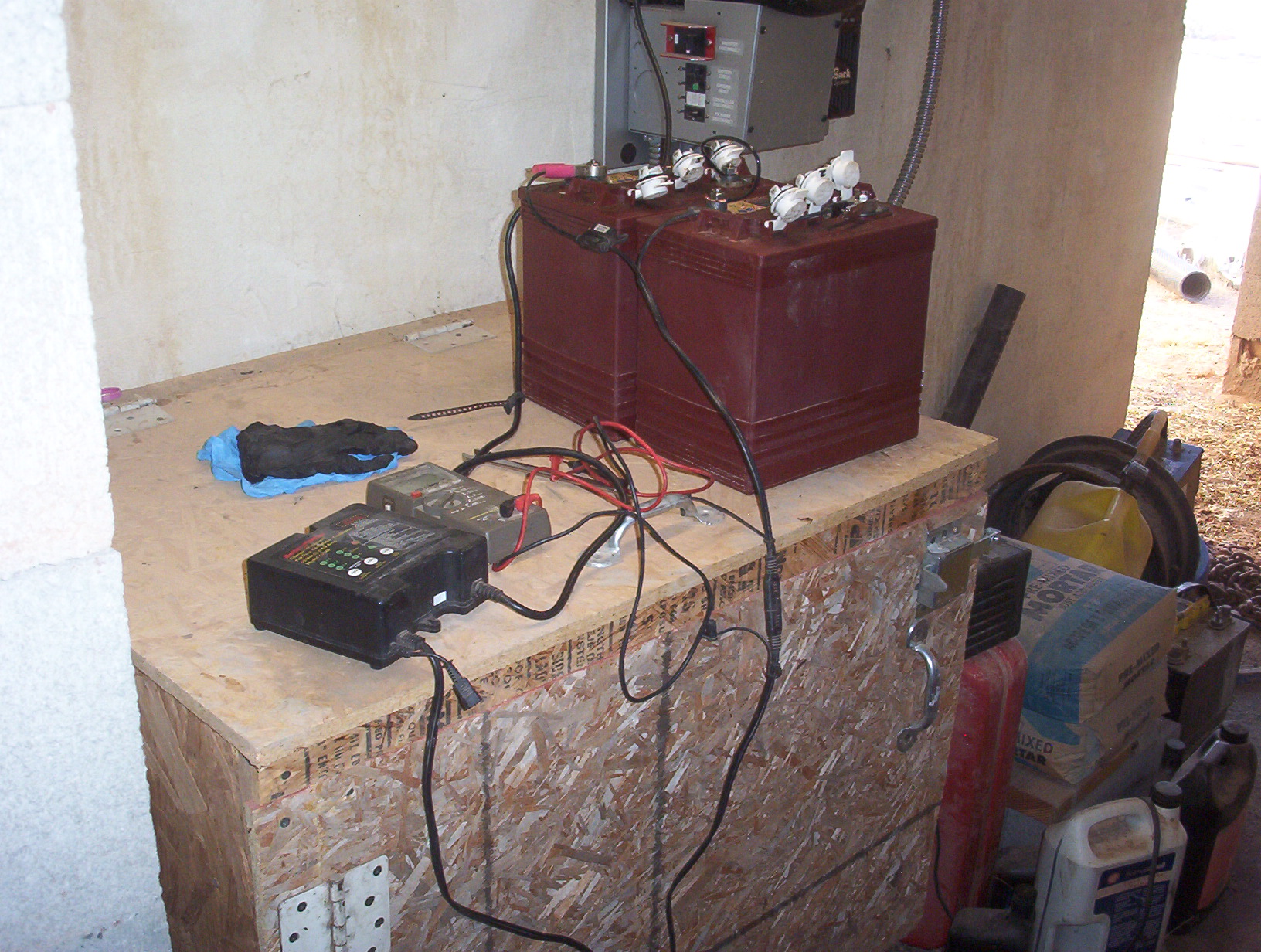
Well, I ran the first two batteries through a second treatment at 4 amps, and got a result I’ve never seen before. Usually the Battery Minder either says the battery is charged and working or not charged and FUBAR. This time, after almost 24 hours at 4 amps, the little lights on the Minder said the batteries were working but not fully charged. They’d been on a charger for two days; if the batteries were taking a charge properly, why wouldn’t they be charged?
So I did something I don’t usually do, I opened the caps and gave the batteries a third treatment at 8 amps. I opened the caps so the cells could go ahead and outgas to their heart’s content, having once actually been present for an exploding lead/acid battery.
Came back this afternoon and the cells in one of the batteries were bubbling happily away. The cells in the other, not really so much. I recognize that’s not a remotely scientific test, but unfortunately I learned two years ago that the filler holes on these Trojan batteries are too small for the probe on my digital hydrometer.
Earlier today I did dig out an old turkey-baster hydrometer,…
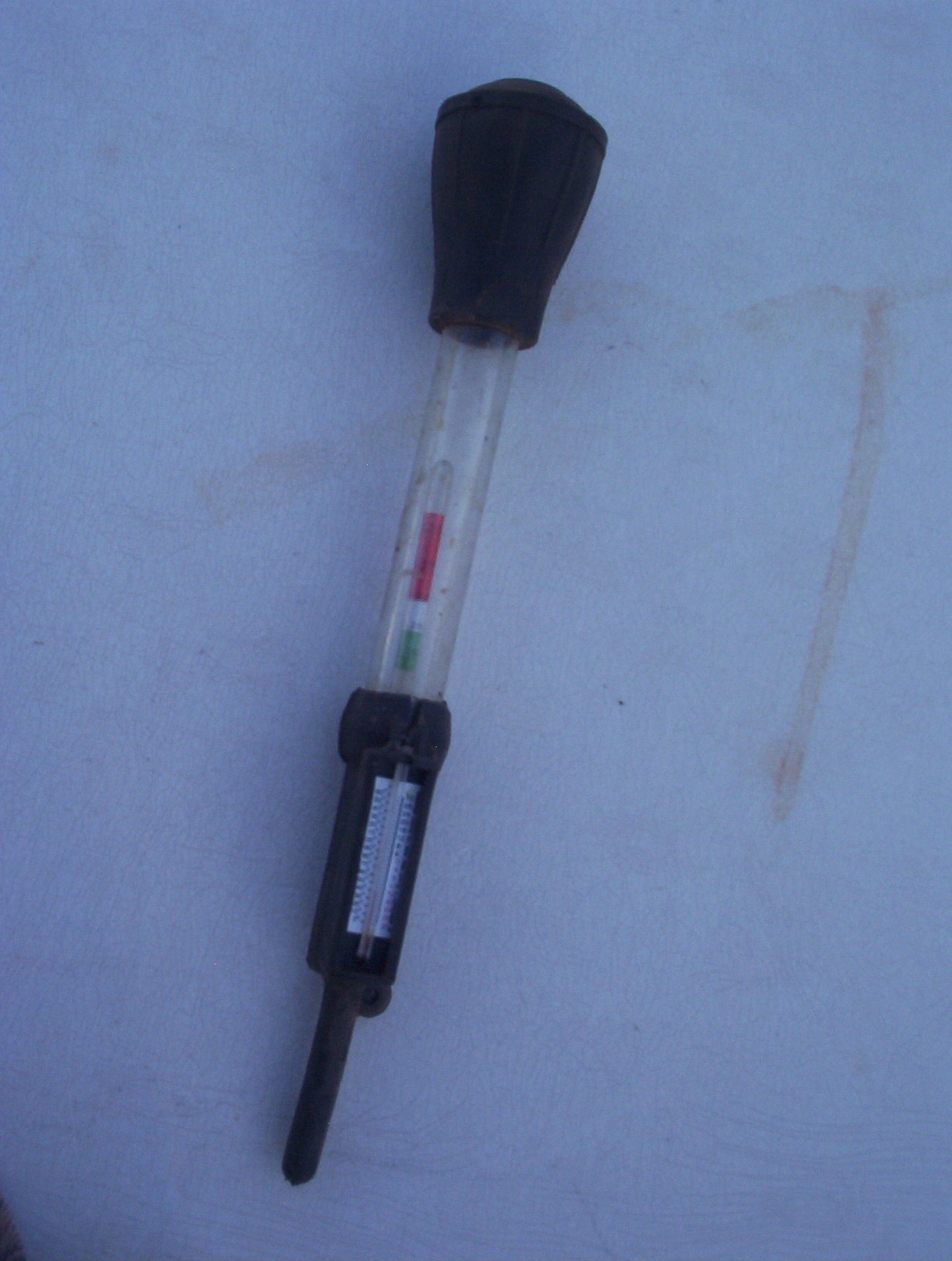
But I really hate them and anyway this one looks like it has deteriorated past the point where it will draw up fluid anyway. I’ll stick in the sink sometime and find out if it even works, then maybe I’ll try to check the specific gravity in the (by now surely fully charged if they ever will be) battery cells.















What you describe may be a symptom of a shorted cell. Does one of those batteries measure two volts low?
No, they measure the same voltage within two hundredths.
So much for that theory.
One is none and two is one. If these are good you might keep them on float for when one of your current batteries shits the bed.