I had a bedroom addition full of drywall dust and scraps. I’m about to have lots more dust where that came from.
I needed this…
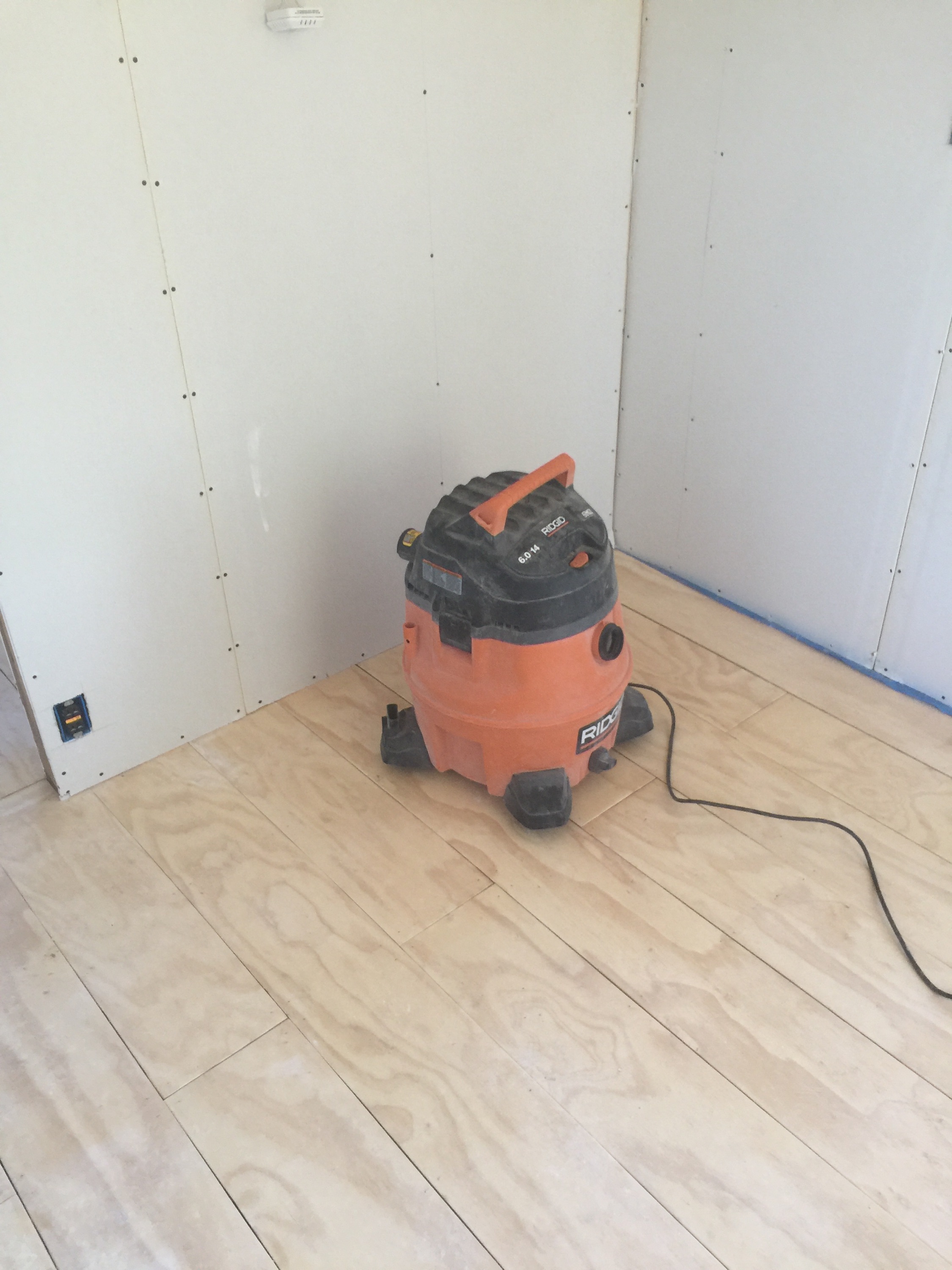
No problem, Ian’s got a nice one at his cave. I brought it to the Lair last week and learned that, absent brilliant sunlight, it could empty my batteries to the point where the inverter shut down in like 10 minutes. Not good.
Enter this…
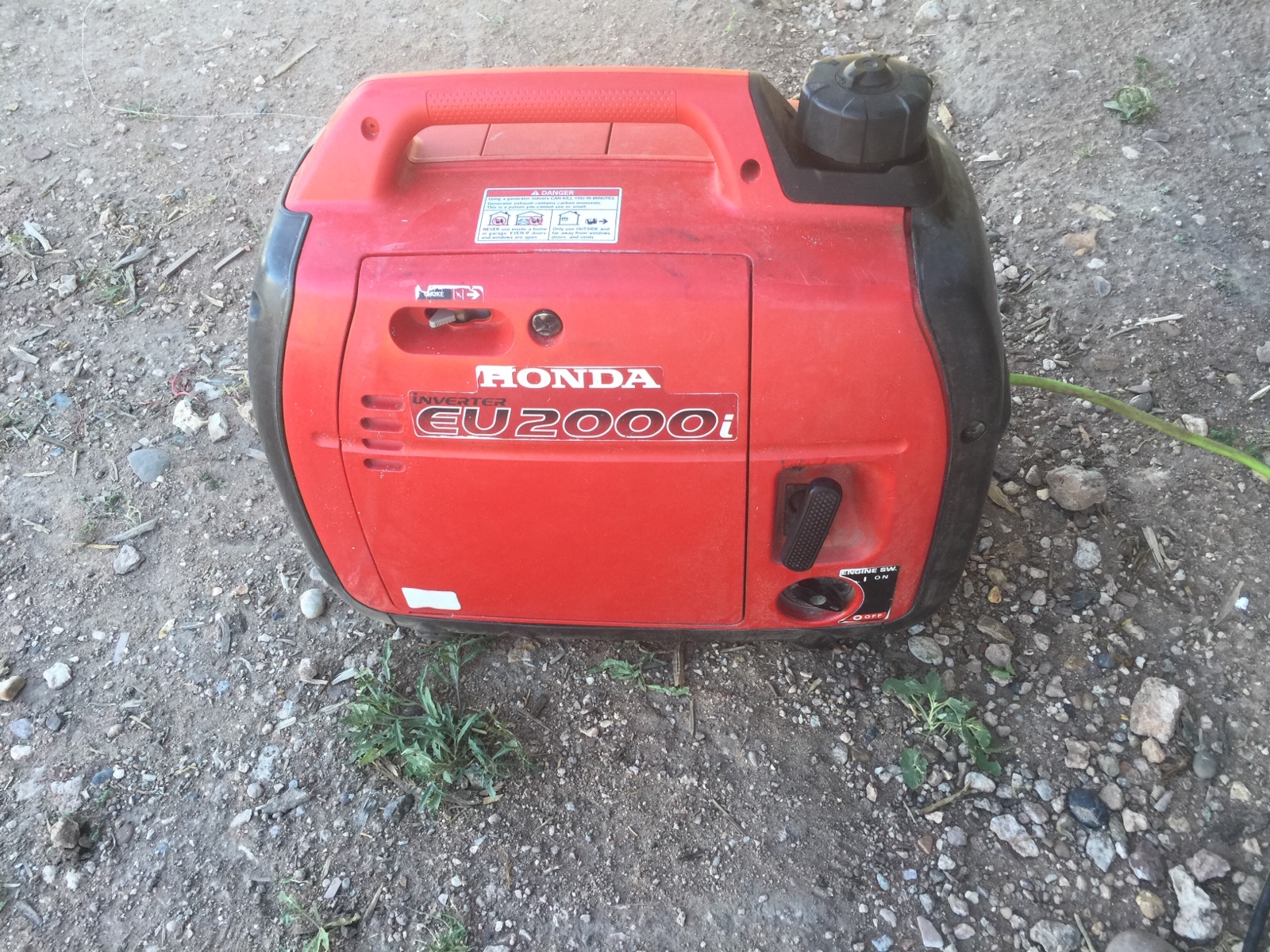
…and the problem went away.
I’ve said many times that I don’t like portable generators, and that except in specialized cases where they’re an unavoidable evil I don’t even want a portable generator near me. They’re loud, they’re undependable, they’re … well, they’re loud and undependable. On a job site sometimes they’re inevitable, but I hate them.
If you just need one regardless, don’t waste your money on the cheapest thing at Lowe’s. Save your shekels or sell your daughter into slavery or something and get a Honda. I’m not an all-knowing expert or anything but I did spend a year and a half working in a small engine shop in an area (this one) where there’s lots of broken portable generators. You know the one brand I never once worked on, because not one ever came into the shop needing repair? Honda.
Also, they’re unbelievably quiet.
ETA: I got an overnight email from a proud owner of a Honda EU2000:
What you didn’t mention in your post is that the EU2000 is an inverter generator, which has the same relationship to a normal generator that a Toyota Prius has to a 1980-style gas guzzler. A normal Home Depot-style generator might suck up to a gallon of gas each hour, while (depending on load) an inverter generator might quietly hum along for several hours on that same gallon of gas.
Do the math! Suppose I needed power for an entire month following a hurricane. At a typical $3.00/gallon for (say) 12 hours per day that’s around $36 per day! Times 30 is $1080 per month!
So they’re also economical, which is something I thought might be true but wasn’t sure of so didn’t mention.















I have that generator! It’s a glorious thing. It was a gift that nearly made me keel over in a faint when I saw the UPS man carrying it up the driveway. Sips gas daintily, too.
Don’t tell me you’ve got one, also? Or at least access to one.
As to that dusty chore, two magic words: wet sanding.
I’ve got the same generator myself. Goes on all the hunting a camping trips. Takes care of the fridges and freezers in power outages. I’ve had it for probably fifteen years and it gets an annual oil change and every other year a new plug. Just sips gas, is quiet and easy to carry around. Expensive but you truly get what you pay for.
I know you hate generators, but I love them. I have a crappy Chinese one that keeps on running. My dad gave it to me several years ago and I have done nothing to or with it since then. Annual start up’s not withstanding) The only time I’ve had to use it was about a year ago to keep dad’s oxygen running while he was fighting his cancer (we had a black out) it didn’t let me down, started on the second pull and ran perfectly the whole time I needed it. I hope that you will reconsider your dislike for them and adopt one into your life. 🙂
Eric
The trick to sanding drywall is to not…I use wide knives and self setting compound. It comes in different grades that have working times rated in minutes. If I recall correctly, 30, 45, and 90 are pretty standard. Good knives are key…they should have a spring steel blade and an aluminum back, held in place with screws clamping the handle on the aluminum. I start with a 5″, and just mix a small amount of the fastest set compound. push kind of hard, and hit the screws and seams so that they are covered, but smooth. Keep the coats thin. Do one side of any corners.
Once that coat is set, scrape it with the knife, pulling the handle towards you…you don’t want to gouge it, just use the knife the same way you would to lay the coats…it knocks off the high spots and ridges.
You can then hit the screws and seams again…this time overlap the edges with the 5″ knife and use the 30 minute stuff. Do the other sides of the corners. The key is to keep it smooth, and run the knife back over after it sets, but before it drys hard.
Do it again, with a 10″ or 12″ knife, down the middle of the seams, and the first side of the corners. Corners can be done with just the 5″ knife. Use the longer set time stuff for this coat, and make sure you use the full width of the knife on the seams. knock it down again after it sets.
Last coat, overlap the seams with the wide knife…your compound should be anywhere from 20″ to 24″ wide at this point, feathered in to the center. This should be the last coat for the screw holes (if they need it, frequently, three coats is enough). Also do the final coat on the corners. After it sets, give it one more scrape, and the mud is done. I typically throw a light orange peel knock down over the top with the long set stuff…I mix it a little thin, but still stiff enought to hold an curl, and roll it on with what looks like a paint roller that is covered with giant velcro loops, then knock it down with the 12″ knife…the resulting coat adds texture to hide any high or low spots, but only stands about 1/16″ or so, making cleanup easy if you have to wash the walls.
A final scrape of the knock down once everything is completely dry, followed by primer and a good latex, and Bob’s your uncle. A 15’x15′ room can easily be knocked out in a day, to the point where you have to wait for the texture coat to dry. The setting compound is a God send.
http://www.homedepot.com/p/SHEETROCK-Brand-Easy-Sand-20-Lightweight-18-lb-Setting-Type-Joint-Compound-384214/100321609
If not for our Yamaha 2600 generator I would be in a serious bind. I have a small 9X12 foot work shop that I never ran electricity from the house too because of the cost. I use the generator to power all of my tools and that’s a lot easier than running a hundred plus foot extension cord from the house. Then there have been the summer and winter storms where the power has gone out. No power = no water. You may not like them but in my world they are great.
Here is the type of knife I use…I think my widest is 18″, but I don’t always use the full width.
Having it that wide makes tapering insanely easy though.
https://www.amazon.com/Warner-10873-ProGrip-Drywall-Taping/dp/B017Z70WCQ/ref=sr_1_1?ie=UTF8&qid=1506349476&sr=8-1&keywords=12+inch+drywall+knife
Yo Richard Douglas, thankyou thankyou for your post. I’m not good at it and don’t have all the proper tools but haven’t sanded sheetrock in years except to correct the work done by the professionals on my house. As you said and I learned the hard way good knives are the key – the work goes so quickly and looks so good. Someone who doesn’t want to buy them for a one time or small job might try renting or borrowing. If you can work odd hours when a professional isn’t using his or her tools, borrowing can happen. It may sound silly but IMO a homeowner looking to hire someone would want to look at the tools they intend to use. Thanks again for your post.
Have a 8.5kw Generator, but HONDA powered, That one word says it all…. Never fails to start on the first pull, runs smoothly, though at that size it is a touch loud, but quieter than other smaller ones in my neighborhood when power goes out… runs refrigerator, lights and furnace without a complaint through a transfer switch… though it is just a tad small for starting up a central air unit, but that’s what fans are for
Yamaha’s version has one feature that the Honda doesn’t. A decent shut off valve for the fuel that allows you to run the carb dry If you run it every 30-60 days, it doesn’t matter. Longer and the Yamaha has it over the Honda for that reason.
I have installed a few of these, with and without cement board.
Depending on what the owner wants.
The one thing that I recommend is that you wrap the outside vent with a layer of hardware cloth.
This will stop mice from entering into both the air intake and exhaust tubes to build their nests.
This is not much of a problem when the heater runs daily, but if you leave it off they will enter.
They will really pack it full if you turn the pilot off.
The pilot does burn a goodly amount of LP, so it makes sense to turn it off when the heater is not going to be used for a week or longer.
And those heaters are a pain to open up to clean.
“Yamaha’s version has one feature that the Honda doesn’t.” Yes, in my experience the Yamaha generators are just as good as the Hondas. Back when I was employed, we had two tiny 1000-watt Yamaha inverter generators to power server rooms in case of power outage. They started easily and then just hummed!
I borrowed one for an evening once for a test. It ran my (then) power-hog refrigerator and computer okay. However it revved and just barely carried the load when the refrigerator’s frost-free heaters cycled on.