The problem with raising chickens in the desert is the same for most lifestock; you can’t let them forage for themselves because there’s not much to forage for and anyway they’re pretty close to the bottom of the food chain. I’ve had chickens die for all sorts of senseless reasons including cannibalism, but so far I’ve never lost a chicken to any (non-chicken) predator.
The price for that is that I (and neighbor L) have to pay for all their feed. To keep the cost down somewhat I supplement the pellets with cracked corn, considerably cheaper. Being me, I tend to keep quite a lot on hand – and cheap out on the storage, which led me to throw it all away yesterday when I dug my scoop into the barrel and it came out green and stinking.
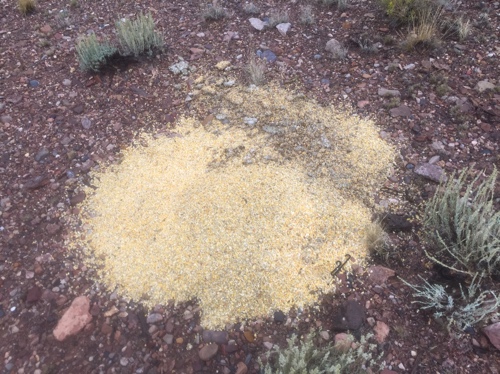
(sigh) I’ve had this plastic barrel since we first started raising chickens, so call it on the order of seven years. Never had trouble like this before, but I wasn’t turning the supply over nearly enough and now it’s all ruined.
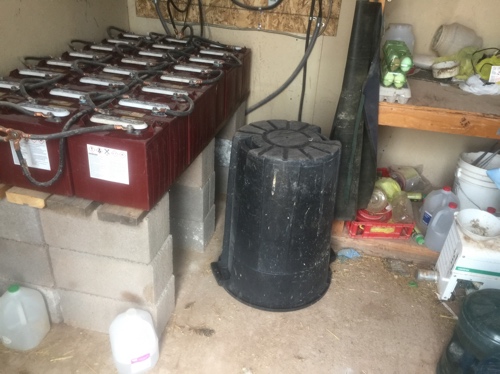
I really don’t know if it got wet from the outside somehow, or if the corn in the bottom half of the barrel just naturally absorbed enough moisture to mold and ferment. But I wasn’t feeding it to the ladies. I dragged the barrel out to the edge of the slope overlooking the wash and dumped it out for the wilder critters to do with it what they will. I expect the ravens to have a party.
Probably should find some way to learn from this mistake: Maybe invest in a better barrel before restocking, and maybe get out of the habit of keeping the barrel full most of the time.













Maybe you should try raising roaches. Cheap to feed and happy chickens.
I had that happen years ago and figured it was the old pellets towards the bottom that had a new bag dumped on them time and time again to keep the barrel topped off. Now I use up all of the 50# bag before I add another. That and a good and tight lid and it’s never happened since.
Well, if it’s case of the corn at the bottom of the barrel aging because you keep adding new corn at the top, then the obvious solution is to rotate two barrels, completely emptying one before starting on the other.
A compost tumbler would let you circulate the pellets regularly. Don’t know if it would be worth the investment though.
Is there any native flora that grows abundantly enough to possibly serve as feed, or as a dietary supplement?
Multiple smaller containers? maybe 5 gallon buckets? Easier to keep fresh, and if something bad does happen it’s to – hopefully – only one small batch. And 5 gallon buckets can use gasketed lids which should seal a lot more tightly than the lid of a large trash can.
More of a pain the butt to manage than one big can, but might be less prone to contamination or “environmental disaster.”
You could always get an old canoe paddle and stir it from time to time. Not as good as a compost tumbler, but cheaper.
Kind of what Norman said. Use multiple buckets. Finish off one bucket, clean and dry it, rotate your stock.
Always clean and bleach your feed buckets. It’s what people down here in the Southeast have to do due to high humidity.
Your bucket probably sprouted mold due to rapidly changing humidity/pressures from storms in combination with old grain, which has a tendency to go off by itself, like old flour or cornmeal.
What works for human food storage is what works for animal food storage.
BSF larvae. Black soldier fly. They are a bee/wasp looking thing that are completely stingless… They lay eggs in fermenting feedstuff an in just a few days you scoop the larvae up an feed them to the chickens. The info is out there. They get less active in cold weather.