Okay, so I’ve got three Rhode Island Reds. Two are indistinguishable. The third is bigger, sleeker, far more assertive, and apparently meaner. If I were the chicken-naming sort, I’d name her something really scary.
From the beginning, the two smaller ones have borne peck-marks. It didn’t bother me if it didn’t bother them, but it has recently gotten worse. Now they’ve both got raw, almost bloody bare patches on their backs, at the base of their tails. Should I be doing something about this? And if so, what?










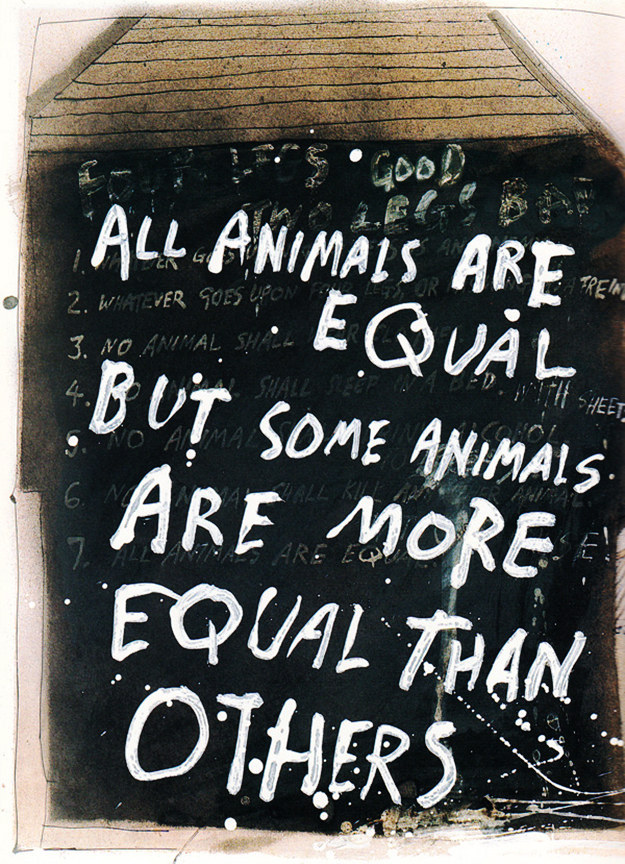



I’m no chicken expert, but if the big one is doing the pecking then a chicken dinner may make that quit.
I have followed Jackie Clay’s advice with much luck:
http://www.backwoodshome.com/blogs/JackieClay/2012/07/15/q-and-a-canning-pickled-eggs-hamster-litter-in-compost-pile-and-pecking-order-in-chicken-flock/
“I’ve got a flock of eight hens. One of the four Barred Rocks seems to be pecking the others above the base of their tails and behind their wings. The pecked birds are getting bald. The birds have access to a large outside run and plenty of food and water. Do you have any advice on how to manage/stop the pecking issue (besides having a BBQ)?
Rick
Spokane, Washington
Sometimes removing such a bird from the flock for a few days to a week or more will change the pecking order so this behavior stops. If it doesn’t work and the pecking begins to draw blood, BBQ for her. — Jackie”
I have found that using something (BlueKote or in a pinch softened roofing tar) to coat the bloody area might discourage the practice. Only BBQ has been Vlad the Impaler.
Sometimes it can be stopped by feeding a form of calcium supplement, for example oyster shells. More often than not –> pot. Coq au vin, that is 🙂
While I’m no expert I have had chickens. The calcium supplement is a good idea in general (to keep their eggshells from getting soft). But the thing that worked for me was something like what M suggested above — in my case, a small can of axle grease. Just rub a little on the spot that’s being pecked. Once these behaviors get started, those feathered bitches will kill each other — though usually it’ll be the rest of the flock turning on one small, weak, or deformed member.
I lean towards the chicken soup solution (heh!). Unless she’s a really good layer.
Our first step is to clip the aggressive birds top beak back even with the lower beak. If they can’t draw blood, it slows them down. I don’t know if it’s the color or what, but no blood no peck. Some will continue on even if they can’t draw blood. I get chicken noodle soup then. I would say 80% of the time docking the beak stops the behavior. The other 20% are assholes and deserve to die.
Roger
There used to be an electric de-beaker tool that remove the front end of the top beak of chickens. Debeaked chickens don’t peck the others. I used to help my parents do this 50 years ago. I bet it is still done. Do a search for de-beakers.
Yep to both Roger and True Blue Sam.
Trimming the upper beak [to match as Roger points out] will stop the pecking of “lower status” hens but still allow the trimmed hen to feed properly from the ground.
The guillotine style dog nail trimmers will work if the hen is Securely held to avoid movement while trimming.
The tip about heating and crushing and then feed the egg shells to the flock is also a good tip for stronger eggs and healthier hens.
I haven’t had chickens for a good long time now but I’m betting that they haven’t changed much in the intervening years.
gooch