Finally got a day without much wind. A little chilly but I worked up a pretty good sweat anyway. I just wanted a moratorium on the airborne chicken shit.

The old straw – soaked, compacted and at best half-rotted – was well over the level of the concrete blocks that hold the fencing. I lost count of how many times I filled the wheelbarrow with it, but we’re down to dirt now. Don’t really want to clean out every little bit, it’s like a sourdough starter, but I can’t let it build up this thick again. The chickens do a lot of scratching, but clearly they aren’t capable of keeping it churned up enough to fully compost. In fairness, the guy who wrote the book on that used sawmill chips and wasn’t in favor of straw. I use straw because it’s available. Not many sawmills around here.
Don’t know if the debris will ever be useful, but it’s there.
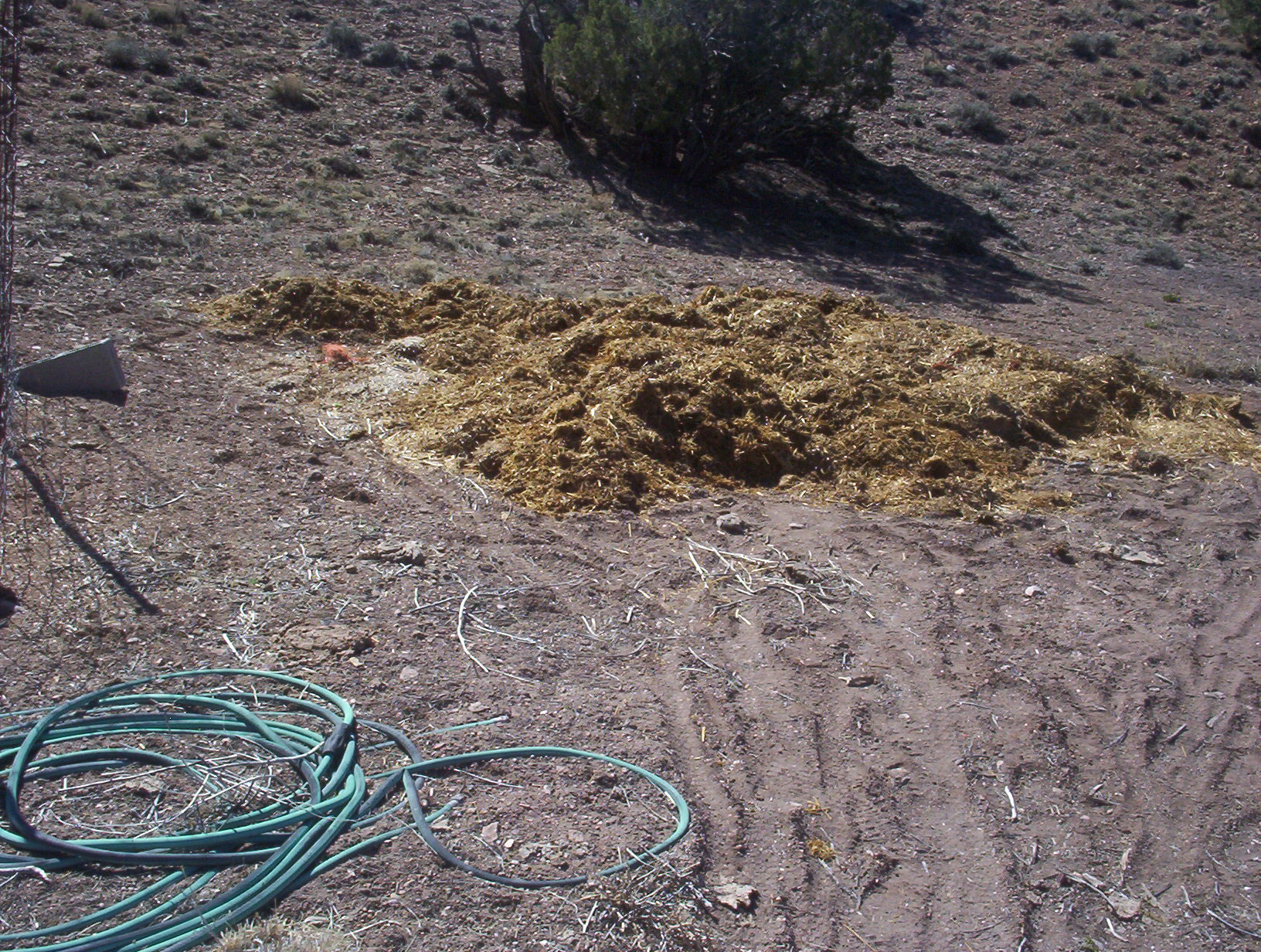
Now I’ve got some other work to do in there but the heavy sweating is mercifully over. Since it’s the first of the month I’m going to eat a late lunch and then go off to Battery Day.














Good job! I’ve the Goat Barn to do, I’m avoiding it…The Garden loves it, but a gabillion wheelbarrow trips will have to wait for better weather.
Speaking of airborne bird poop (and lots of other nasty stuff), I do hope that you thought to wear a paper mask whilst doing that job.
What sort, if any, insect life did you observe in the waste? The reason I ask is that I was wondering about the viability of composting worms in your coop – would they survive the chemical/nutritional environment. Composting worms are capable of ‘processing’ materials rapidly and they could make your job easier and the whole chicken endeavor more productive. Assuming you could get worms established before the chooks ate them all – they’d provide some good nutrition for the birds.
I’ve been messing around with composting worms for several years now in various environments – worm bins, raised beds and containers, compost heaps – both horse manure and kitchen scrap. I can’t think of a bad thing to say about them – they’re hard workers and they’re easy on the pocketbook. In terms of permaculture – they’re great for turning outputs back into inputs.
They’re also hard to kill. In earlier times I kept one bunch in a gallon-sized container feeding with nothing but coffee grounds for about a year and they didn’t complain and they multiplied. All I had to do was provide a warm, moist, and dark environment.
If you ever want to experiment with this just let me know and I’ll bury you with all the appropriate details! Just think, Joel – you could add ‘worm-farmin’ hermit’ – to your many descriptors.
PNO, I know people who’ve tried to raise worms here – roughly the same subset of people who’ve tried to raise fruit trees here – but I don’t know anybody who’s succeeded. It’s just not a good environment for earthworms. I do occasionally find grubs in the chickens’ straw. There are places where you can find a *lot* of grubs, in monsoon, and the chickens eat’em like candy. But I’ve never seen an earthworm. I’ve occasionally thought of raising mealworms for that purpose but haven’t gotten around to it.
Hey – I resemble that insinuation! For myself the worms are a success – and the fruit trees are a ‘work in progress’ – but certainly no failure. The worms are a success because it’s easier to create an environment they like. With the trees – not as much. The folks in the valley 1000′ below have a fine scattering of orchards and trees in yards – probably that bit about the water table being about 20′ below helps. I don’t have a meter but I suspect that 60-75% of our water goes to the trees. During the hottest and windiest times they’re on an ‘every three days’ schedule for slow, deep soaks. I’m up to a couple dozen trees scattered over a couple acres near the buildings and hope to get another 8 or so out in another month.
The 15-20 degree difference in temperatures that we have makes a big difference in terms of the worms – they don’t handle freezing well and require some ‘bedding’.
Minor thing… earthworms are different from composting worms – but I suspect you pretty much meant what I was referring to. Composting worms have traits that are suited to a gardener’s agenda – earthworms less so.
If you were closer I’d take that load of chicken straw and add it to my compost pile to be turned into garden dirt. It might not have composted well in place, but added to my occasionally turned compost pile it’d be awesome.