I’ve got a big yellow paperweight sitting in my driveway at the moment, and the large portion of my subconscious that still thinks normal discourse involves bullying and being bullied has a field day with me every time I look at it. So in proper philosopher fashion, I’m going to try to use that in gassing about something unrelated.
Once I was a technician (except then we were mostly still “mechanics” – between ourselves we were just “wrenches”) in the back shop of a Cadillac dealership which isn’t the most blue chip wrenching job you can have but it ain’t bad. Then I put in two years teaching in a vocational school, which gave me some classroom chops and also my first lesson in the difference between knowing about a technical subject and actually being able to do something with it. When I hired on at the school, my new manager stood me in front of a chart with all the class titles. I forget what they all were so play along, but the conversation went something like this…
Me: “General Repair, Engine Repair, Brakes & Suspension, Advanced Diagnosis – I could teach any of those without cracking a book. Automatic Transmissions – no, I haven’t done more than change fluid in one of those since I was in tech school.”
Manager: “That’s a shame because the opening is in Automatic Transmissions.”
Me: I am a master of the automatic transmission.
I really wanted out of that dealership.
And I worked fast and diligently to become – if not an actual master, then someone who can fake it for 120 hours of classroom lecture and demonstration. I had a lot of information but little experience. Oh, I was occasionally called on to diagnose some transmission problem in the school’s repair shop, and I usually got it right. And I did have a lot of shop experience, just not in that particular specialty. I wasn’t a total fraud, but I wasn’t the experienced transmission tech I posed as.
Then I quit the tech school (for the usual reason, to avoid becoming a mass murderer) and got a real job as a contract instructor at a rarefied automotive R&D facility in Dearborn. And I spent another two years learning about another system about which I had previously known nothing, only this time the audience was not a bunch of high school dropouts but engineers and development technicians who could spot a fake in a heartbeat. I learned fast – and now I wasn’t even pretending I’d ever worked on this stuff in a dealership because it was only then hitting the dealerships.
From there I became a tech writer and wandering instructor, and EEC-IV, as Ford’s then-current powertrain control system was called, was my specialty. Now I really wasn’t a fake. I wrote the manuals for years. I was a thoroughly eclectic expert in all EEC-IV variations. When Ford sold 25,000 2.3L Tempos to the mainland Chinese government, I’m the guy they sent to explain them to the Chinese techs. I have eaten Peking Duck in honest-to-god Peking, across tables from stout guys in Mao suits I hated on general principles.
After that there was a misguided swerve into management and my career started its long painful downhill slide, but the point of my longwinded recitation is that intellectually I know quite well how an electronic powertrain control system works, though all of the above was decades ago and I’ve forgotten a good many details. And I’ve never really pretended to know how to work on one, except in the most general sense. I don’t know where the crankshaft sensor on a 13-year-old Jeep even is.
And so now I stare helplessly at Landlady’s uselessly inert Jeep, and I just know that if it turns out to be a problem with the control electronics I’m going to say, “Aha! Yeah, I should have known that.” But I didn’t and I don’t, because information is interesting but you only achieve knowledge when you can put the information to use.
These days my own knowledge base runs more along the lines of what, among the types of wood available in a desert setting, makes the best improvised firewood. I can build a functioning solar power system from scrounged parts. I can raise, kill and butcher animals. I know how to fix a misbehaving propane system, and will go out and do so right after I finish typing this.
I know how to do quite a lot of things I couldn’t do eight years ago when I moved here, even though I called myself a ‘survivalist’ for years and years before actually gaining experience. I was of the guns and gear school of ‘survivalism’ since before I could grow a proper beard, and I did not know what I did not know. And that’s the most dangerous form of ignorance of all.
Nowadays when I read some article about bugout bags, or hear somebody talking about his cellar full of MREs, or a review of the eight best kinds of firestarters or the best knife for batoning wood, or click through yet another argument about ‘full-power’ rifles vs. mouse guns, I have a good laugh – at myself, not at the people doing the arguing. Because I was one of those guys, and what I know now is what those guys are in for if they ever get thrust into a situation where they need to use their “knowledge,” which is actually only information and not very useful information at that.
The end of the matter, 900+ words later, is that the best way to learn is to do – and preferably in a setting with lots of fallbacks so that your inevitable early failures won’t kill you or somebody you care about.












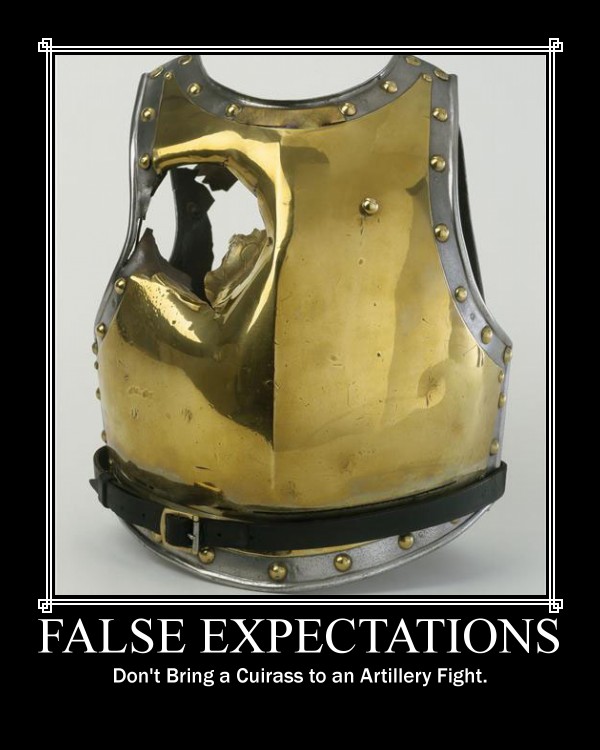


Yes indeed. It is just as important, if not moreso, to know what you don’t know, and assume there is always something left to learn even when you have good experience.
Was recently trying to convince someone of that when they proposed to do surgery and freaking blood transfusions – in SHTF field situations – from directions in a book. Hes a wet behind the ear EMT, and doesn’t seem to understand the need for hands on experience, with competent teachers to prevent oopsies. (Not that even the best don’t have oopsies from time to time!!!)
No idea how many people this guy will kill before someone puts out his lights… but I’m glad he’s not living anywhere around here.
I have a Shopsmith band saw in my basement that gradually became useless because the blade would only track for seconds before jumping off the wheels and attacking me. No amount of reading the factory manual and following the adjustment procedure helped. The nice Shopsmith folks offered to fix it for a flat rate if I simply shipped the heavy thing back to the factory. (no thanks)
(Imagine harps playing) Then I found the Shopsmith forum on the Internet and searched for the discussion thread about fixing that particular problem in that particular model. The free information I received allowed me to fix that sucker myself in minutes.
My point? While I enjoyed reading your essay, perhaps your time would be better spent trolling for free troubleshooting information on a CJ forum somewhere.
What year is that jeep, and what engine does it have? I’ve got a bit of experence dealing with fuel injected jeeps.
It’s a 2001 Wrangler with a 4.0L.
So it cranks but you get no bang, you can pull a plug and see if it’s getting fuel, and you can check if it’s getting spark. If it’s missing both the most likely cause is the crank position sensor(on the top of the bellhousing) the only other likely causes for both fuel and spark to be gone I can think of are no power to the ECM or a dead ECM.
I don’t remember if you have an android phone or tablet, if you do a code reader for this jeep is about $15 in the form of a blue tooth to OBD2 adaptor.
This is called:
“Getting old.”
I have that. A lot of it. I was once a diesel technician; or so I was told by people who are paid to tell people shit like that.
I have to this day….well….I think I still have, a shitbasket of papers declaring me to be the man with the wrench. I was, in the actually, a certified hack who made shit work with luck, bailing wire and duct tape. But I did manage to make shit work, frequently on the side of dark, narrow country roads in the snow in the Four Corners area at one time in my life.
I was not a master technician, despite what the ASE, MACS, ATRA or several other forgotten alphabet associations said nor was I as astute as the Society of Automotive Engineers, for whom I was a “consulting technician” would have you believe. I did OK and was a fairly accomplished shadetree mechanic.
Joel, do you remember the huge blue Suburban I drive? Yeah, the diesel with the giant anti aircraft artillery proof brush bar and lights…..smoke, offends Prius drivers…. that Suburban?
Oh yes, the beast…… it sat idle for about 5 years because I can’t get my back to cooperate with repairs at an awkward end of the compartment where the growly parts live. I had to pay Allen GMC to do that for me, I’ll take it to a friend who does electrical to have him fix the shit an alarm hack did. I may have my Godson do the brakes like he did on my Ford, because….squatting….
I fixed a massive fuel leak, or rather Allen did, and now from sitting idle for so long the injector pump leaks. I’ll actually have someone replace that as well, because my back and knees say it’s a fuck you job.
Fancy ideas of survivalism, or rather the fancy ideas thereof, flew out the dammed window when they cordoned off some arteries and replaced them with others and a broken back the made military life stop happening flared up again to make all life hurt.
Oh, I can still do it. Just much more slowly. I am actually better at it than before because I have to stop and think things through rather than just muscle things along.
I just have better sense than I used to……. bug out bags…..fuggetaboudit.
Ben has a vey good point. A forum would tell you where it is, and how to replace it, and how much it costs. I use forums, and also every so often buy a subscription to AllData. The free forums are very helpful but of course I don’t have the professional experience you all do. Like Ben and his Shopsmith experience, I had a local repair shop tell me that I had a bad sensor that was located somewhere on my exhaust system, it was a very expensive part, and it was a very dirty job to replace it and I should pay them many many hundreds of dollars to avoid that unpleasant experience. Thanks to AllData I found that the sensor was on top of the engine block, in plain sight, consisted of a modestly priced sensor, gasket and two bolts, and could be changed by a reasonably coordinated 5 year old standing on a stool. (Based on listening to Sam’s Garage I think your issue is the crankshaft position sensor too. lol ) For me the downside to a code reader is that it will tell you the symptoms (information) but there can be many reasons for what is happening and then you have to think backwards to decide what the origin is (knowledge). Let us know the outcome so we all learn from your experience.