…does come to mind.
Neighbor J, by far my most dependable employer, has for years been bothered by two big piles of roadkill juniper. When clearing and leveling a space for a house, it was the most common practice to simply bulldoze the ground flat trees and all. The rejected trees and dirt ended up a big twisted mess off to the side. J’s property has two of those, and he has often expressed a desire that they not be there but it’s only this year that he decided to do something about it. Darrel the Former Cop, his next-door neighbor, took care of the easy one last week with his tractor. The other one is more remote and was unfortunately pushed into a rock gully where it was guaranteed to be many times more difficult to remove. I got the nod to deal with that one, at $10 an hour.
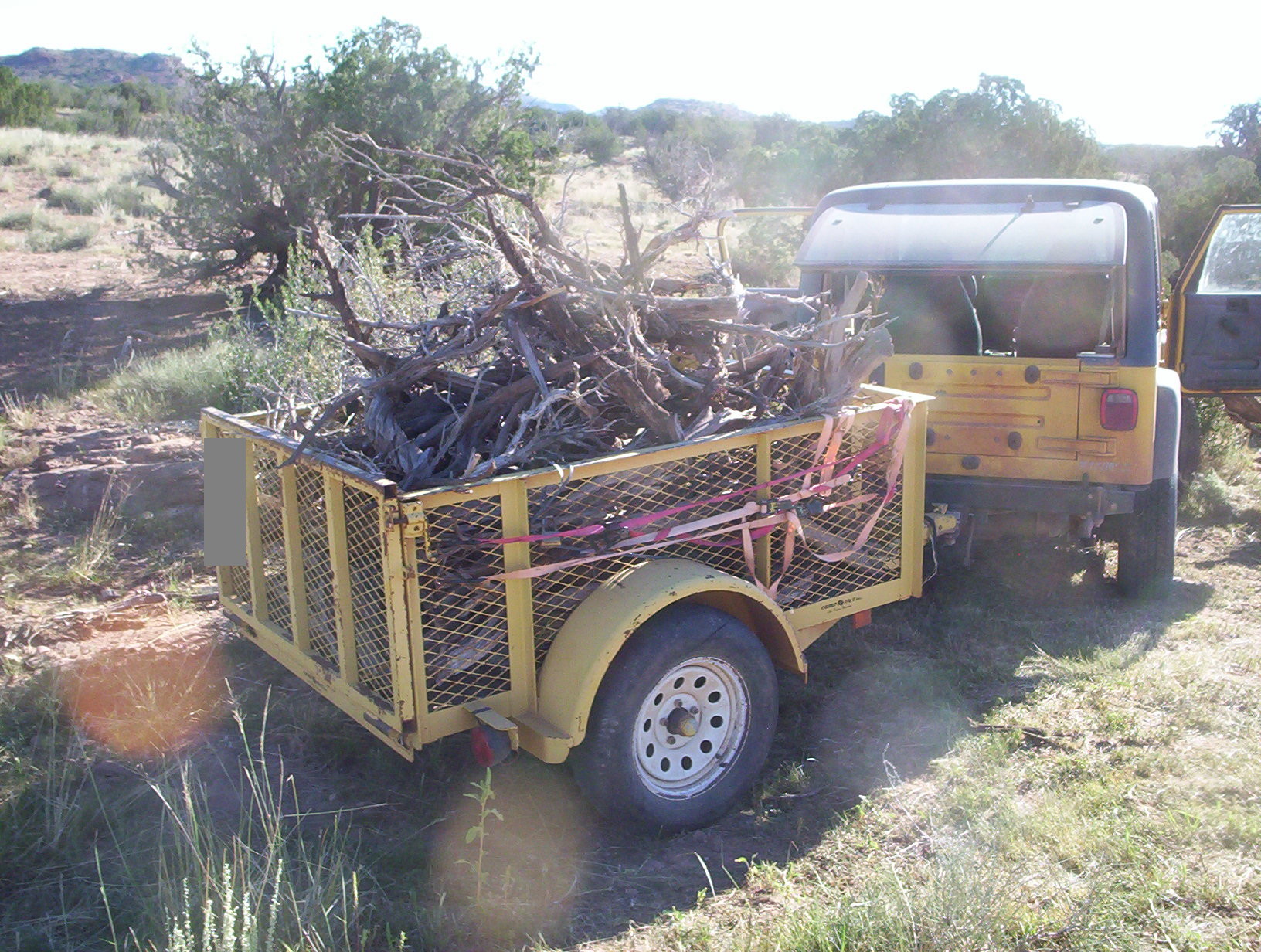
It seemed simple enough at first. Hard, but simple. Back the Jeep’s trailer into the bush as close to the gully as possible. Climb down into the gully, pull out brush, toss them up to the trailer, fill the trailer. Hey, it’s a pretty day and I’m getting paid by the hour. Pick up a few minor scratches, keep your eyes open for rattlers, what could possibly go wrong?
About two trailer-loads into the job, the thing that would go wrong started to emerge. By the third load, it was clear.
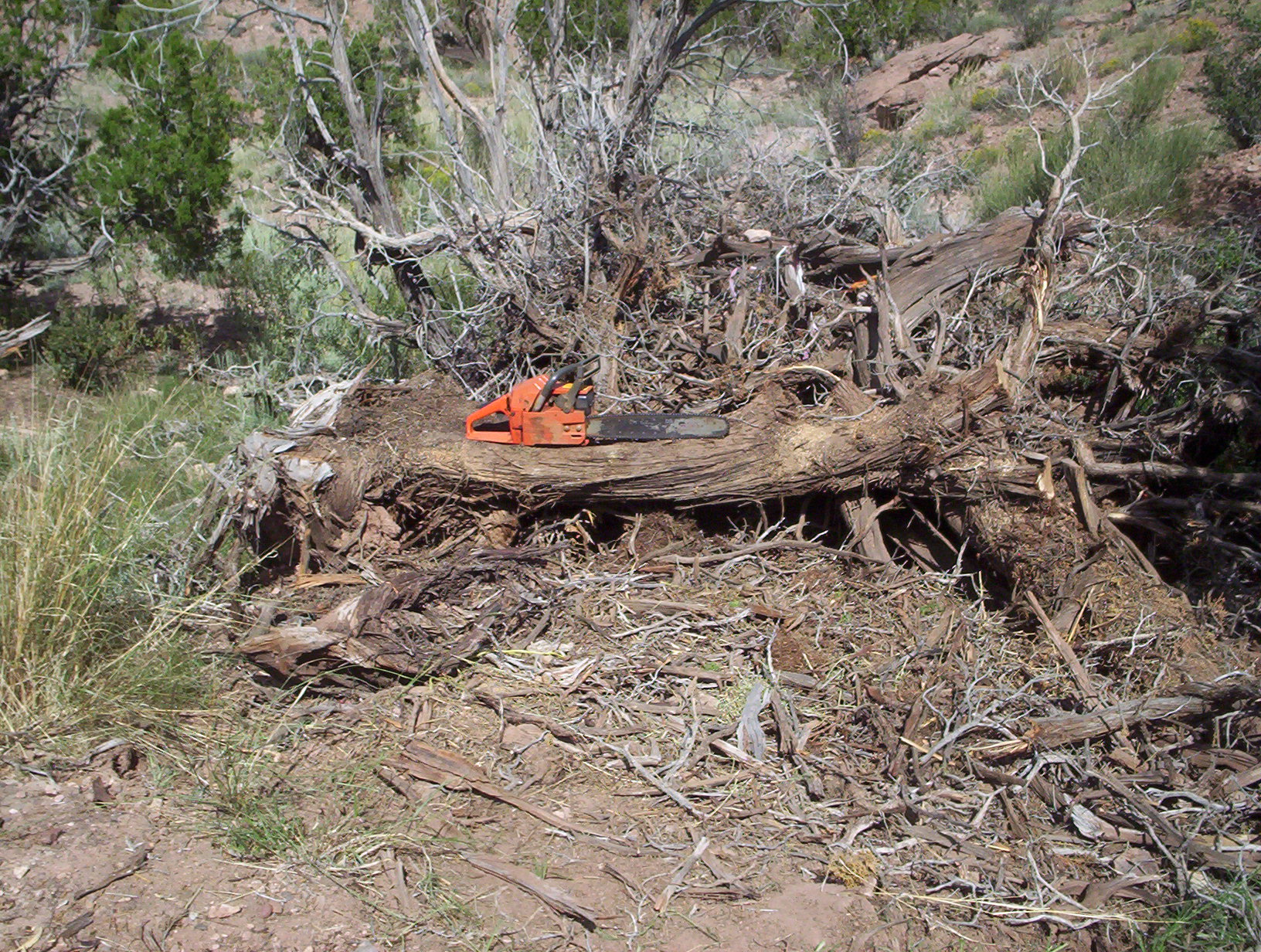
What we had taken as just a big pile of brush turned out to be a medium-sized pile of brush on top of at least one big juniper. Not enough I have to cut it up, I have to cut it up and haul it out of a steep gully. Fun. To add to the owie factor, all my good chains were at the saw shop in town being sharpened. The one I had on the saw was good for a few cuts but nothing more. This is enormously dirty wood, very hard on chains.
Fortunately, around the time my situation became unavoidably obvious, J was in town running his daily shipping errands. Thank heaven for cellphones: I called him and got him to go to the saw shop and bring back my chains. So tomorrow I’ll climb down there and attack that trunk and whatever’s behind it, cutting them into small enough chunks to get them out of the gully. With luck I’ll finish tomorrow.














My first husband and I used to cut a fair amount of juniper, and also manzanita and even some larger creosote bushes. The sand and dirt in the old stuff that was down was a big problem for the chainsaw, and we usually set it up on rocks and beat the tar out of it as much as possible before starting to cut it. Some of the juniper was pretty big, and couldn’t be lifted until it was cut at least some, but I think we saved a good number of saw chains for our efforts. Going to be harder to do with just you, obviously.
Hauling it up the gully all alone is the serious part, I think. Be very careful, Joel. 🙂
Do you get firewood out of this deal? That stuff must be nicely aged.
A little bit, yeah. But after several tries I’ve learned that roadkill piles don’t yield much in the way of decent firewood. It’s twisted and shattered and often virtually buried in dirt. Whatever I found that would make decent firewood I set aside so as not to be wasteful, but it wasn’t much. Mostly I just hauled it off to dump it in a less troublesome spot.
As long as it won’t make good firewood, wouldn’t it be more efficient to just burn it in place and remove the ashes if he doesn’t want them there? instead of doing all that cutting and tossing and hauling and dumping? or am I not understanding something because it’s been a while since I burned brush piles?
wouldn’t it be more efficient to just burn it in place…
It might be, but it’s out of the question. J is paranoid about brush fires the way I’m paranoid about chimney fires. That’s his main reason for wanting the pile gone. I personally think it could be burned safely, and it would certainly be less work. But it wouldn’t take very much being wrong about that to cause a lot of damage.
Pick a rainy day without wind (if you have any of those) and burn in place.
If the pile is too big start the fire nearby and just throw a piece or two on it as you go along.
I’m pretty sure I’ve seen fields in eastern Oregon where farmers just burned it to get rid of sagebrush and bring back grass.
Disclaimer: don’t blame me if you burn your house down. 🙂