It’s the things you don’t know you don’t know that get you. You can plan for the things you know, but (okay, I won’t say you. I) tend to make comforting assumptions about the things I don’t know.
Forgive if this meditation turns out not to make much sense. It’s early as I start this, and I’m not yet fully caffeinated.
Yesterday afternoon I found myself doing something distinctly winter-related…
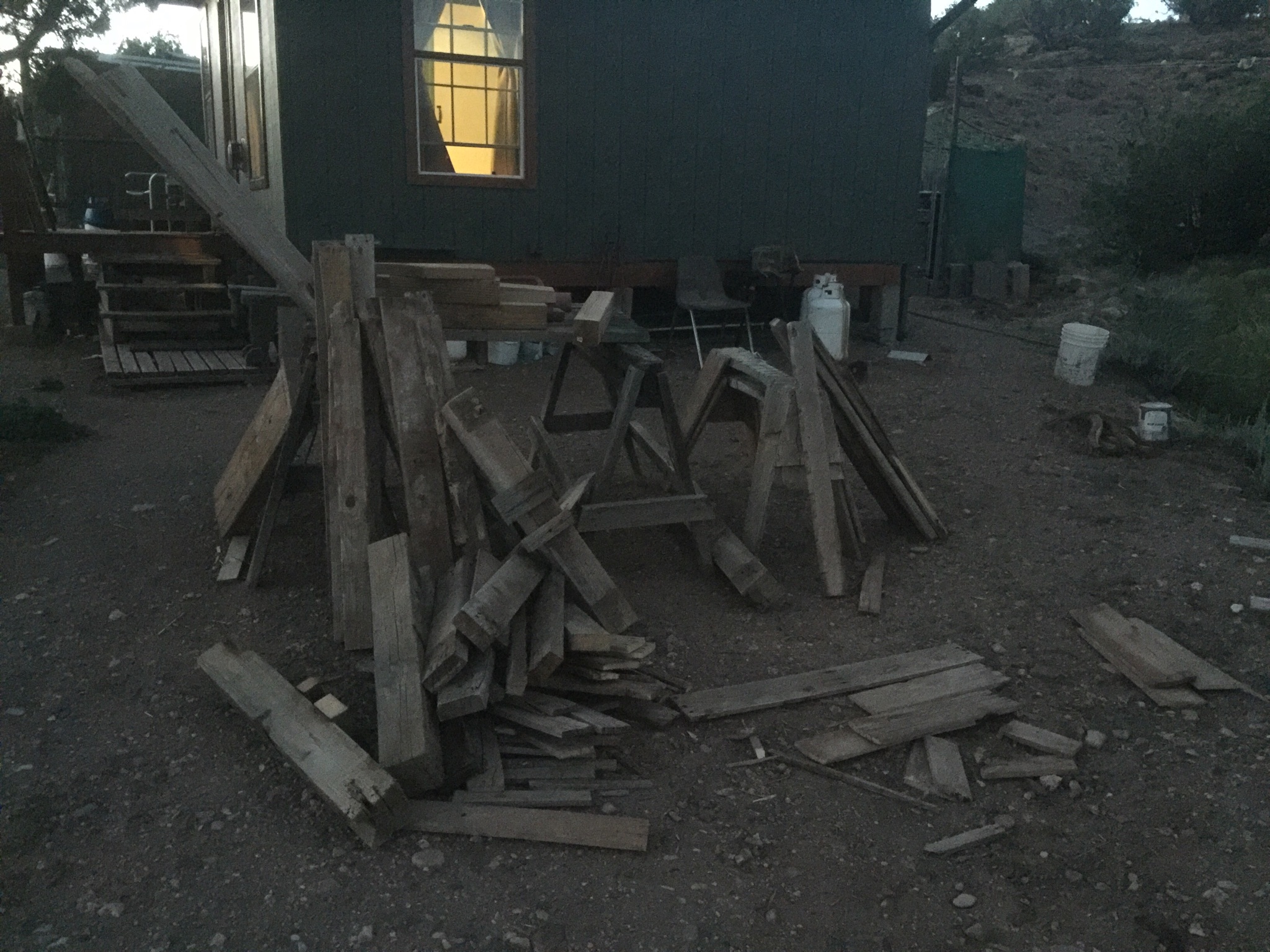
Last week I cleaned up a pile of old lumber and pallets from a neighbor’s yard. Rather than take it to my enormous and comforting woodpile, I dumped it off in my own yard. At the time this seemed the labor-saving thing to do, since some of it went to the burn barrel and some – with some disassembly required – to the woodshed. But it did leave a big unsightly pile of stuff right where I still have constructive work to do, which meant I needed to take a few hours and get rid of it. Yesterday afternoon I cut up the pallets, and this morning while it’s cool I’ll clean up nails and cut the wood to stove lengths.
Guess that got me in a winter frame of mind, because it led me to this meditation about how the little factors you didn’t know about can really stick you in the ass.
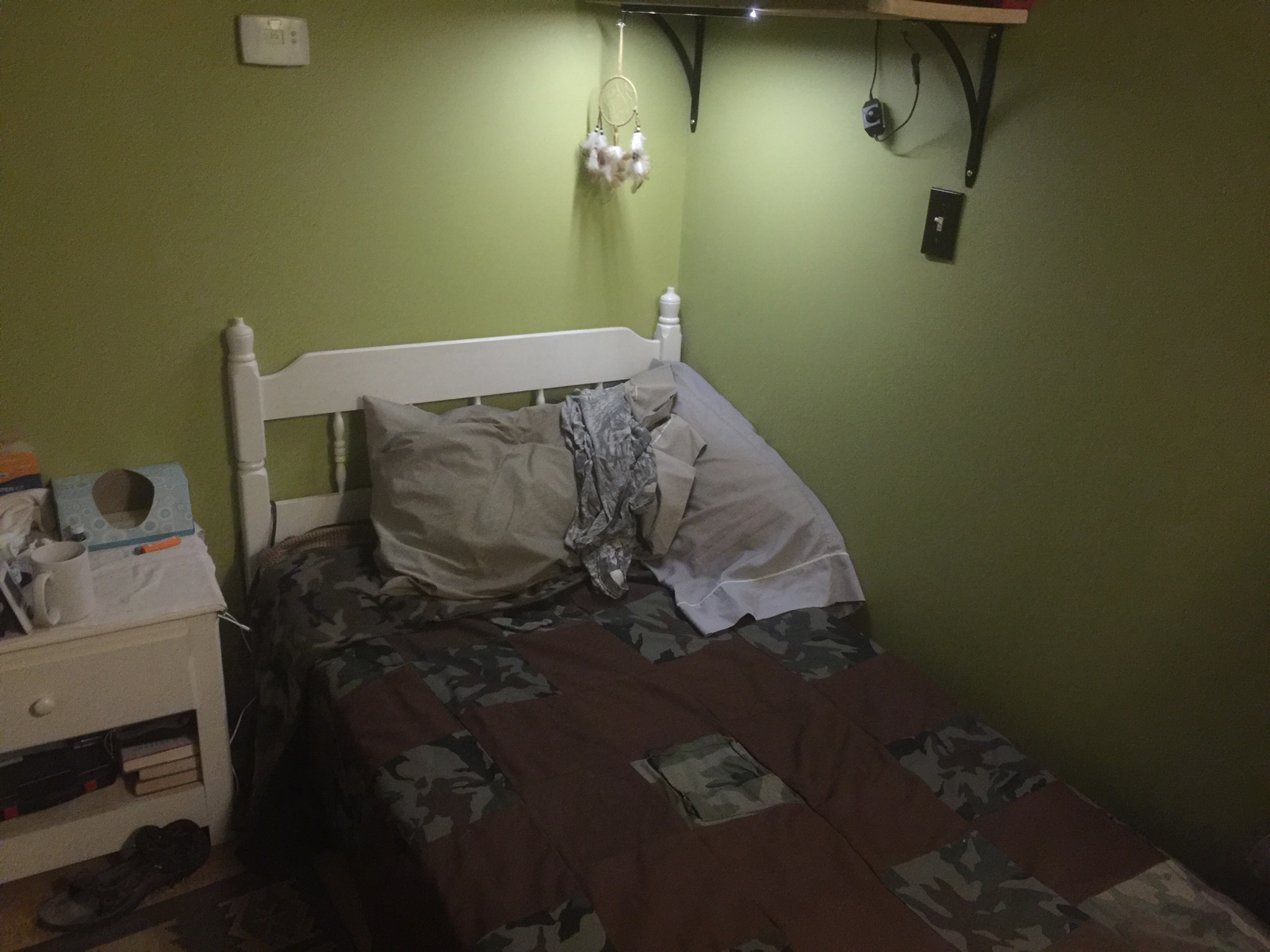
Early this morning I was making my bed, same as always. I happened to look up at the bookshelf and there, in plain sight, practically giggling at me…
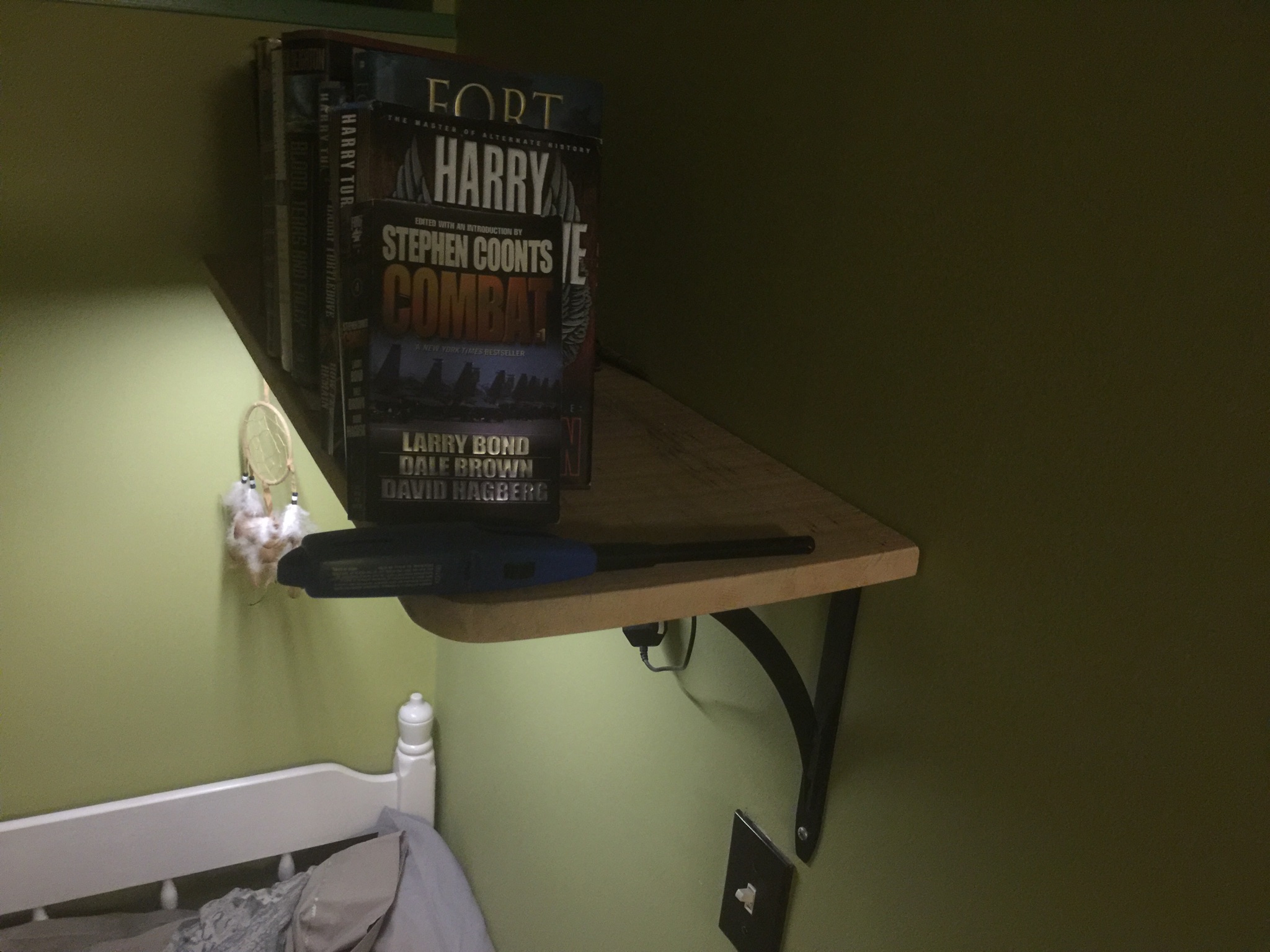
…was the butane lighter I looked all over the cabin for two days ago when I swapped the propane bottle for the cookstove and had to re-light the oven pilot. Couldn’t find it in any logical place. Why oh why did I put it up there?
I don’t really need it for the cookstove, it’s only a convenience. But I was upset at having misplaced it, because there is one application for which it has proven a real necessity…
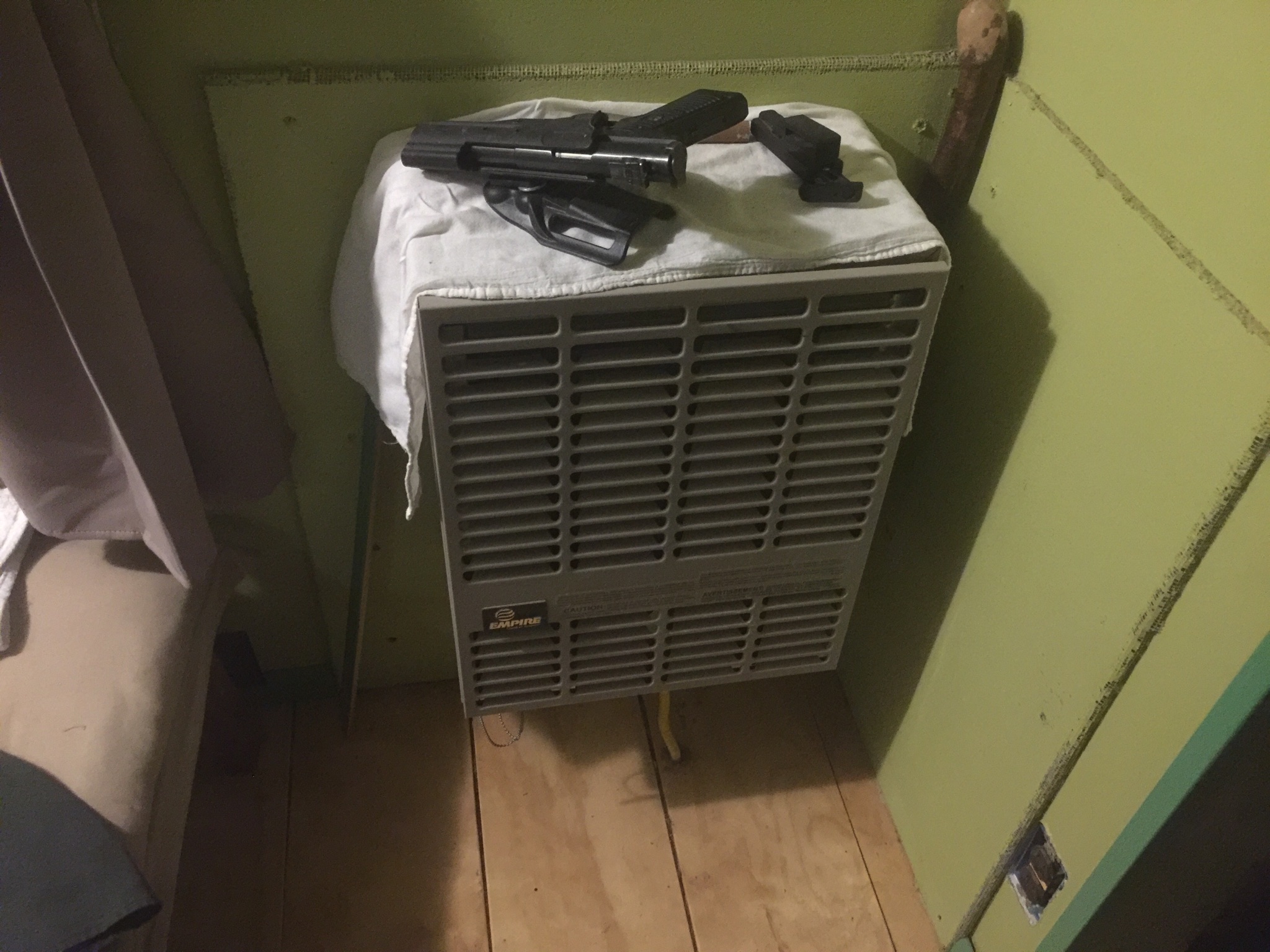
That miraculous thermostat-controlled propane space heater in my new old-man bedroom. Yeah, I said while building the addition that the heater would probably be relegated to extreme weather conditions but you knew I was lying, right? Waking up to a room with temps in the mid-fifties, not having to shiver in your coat and swear until the woodstove starts making a difference – that, my friends, is one of the seldom-mentioned glories of the 20th century.
But for reasons outside my technical understanding, there’s one apparent problem with this particular heater: It has a perfectly good spark lighter for the pilot, but getting the pilot to catch fire is really hard. I’ve done it with the spark lighter, once or twice, but generally it requires a long-stem butane lighter. Which is why I was upset at myself for misplacing mine: It only does one thing, but last winter it had to do it quite often.
The hard-to-light part seems related to the reason I had to learn whether I could even use the heater every winter night…
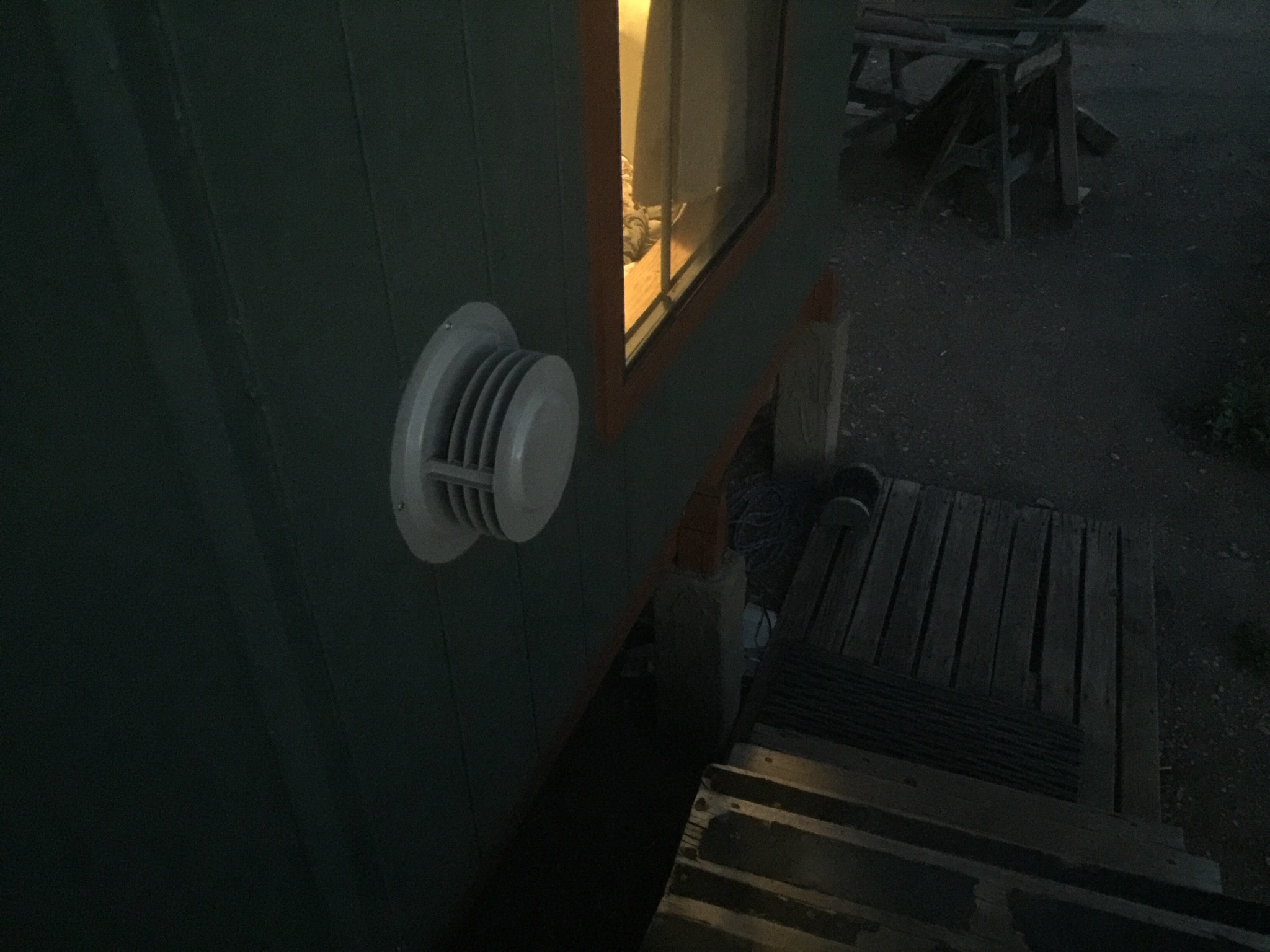
It’s vented to the outside, which means the firebox is a windy place. Seriously, you remove the sightglass and stick the burning butane lighter into the firebox, and four times out of five the fire goes right out. No wonder the pilot doesn’t want to light. Also, because of all that turbulence, the heater pilot isn’t like the cookstove’s oven pilot. The oven’s pilot flame is tiny, but the one for the space heater is hefty enough to survive the draft. Which means it sucks down propane even when the heater isn’t active. Which means it empties one of my little 30-pound bottles in ten days to two weeks even when the weather isn’t especially cold. Which, finally, meant that last winter I swapped out bottles several times and so needed that butane lighter several times.
Which brings me to that early-morning meditation about the things you don’t know you don’t know. I’ve dealt with propane pilot lights all my adult life in appliances like water heaters and cooking ovens, and they’re always tiny things with essentially insignificant fuel usage. You have to worry about how much gas the thing sucks down when it’s running, but when it’s on stand-by it’s not using measurable resources. And so I wasn’t ready for how much of a propane hog the space heater would be even when the thermostat was turned right off unless I went to the trouble of closing the gas right down and killing the pilot. It was a shock to my wallet last winter – not to mention the opportunity cost, if I’m using the term correctly, of hauling all those propane bottles back and forth to get them refilled.
Totally worth it, don’t get me wrong. Oh, yes. I now class the humble thermostat nearly in the same category of luxuries as the electric light and the flush toilet, luxuries so transformative that they might almost be classed as necessities. Things that help form the border between surviving and living.
AND! With this summer’s final tweak to the bedroom space heater plumbing, even the “gotta relight the damned pilot every time I swap a bottle” problem should cease to be a constant hassle…
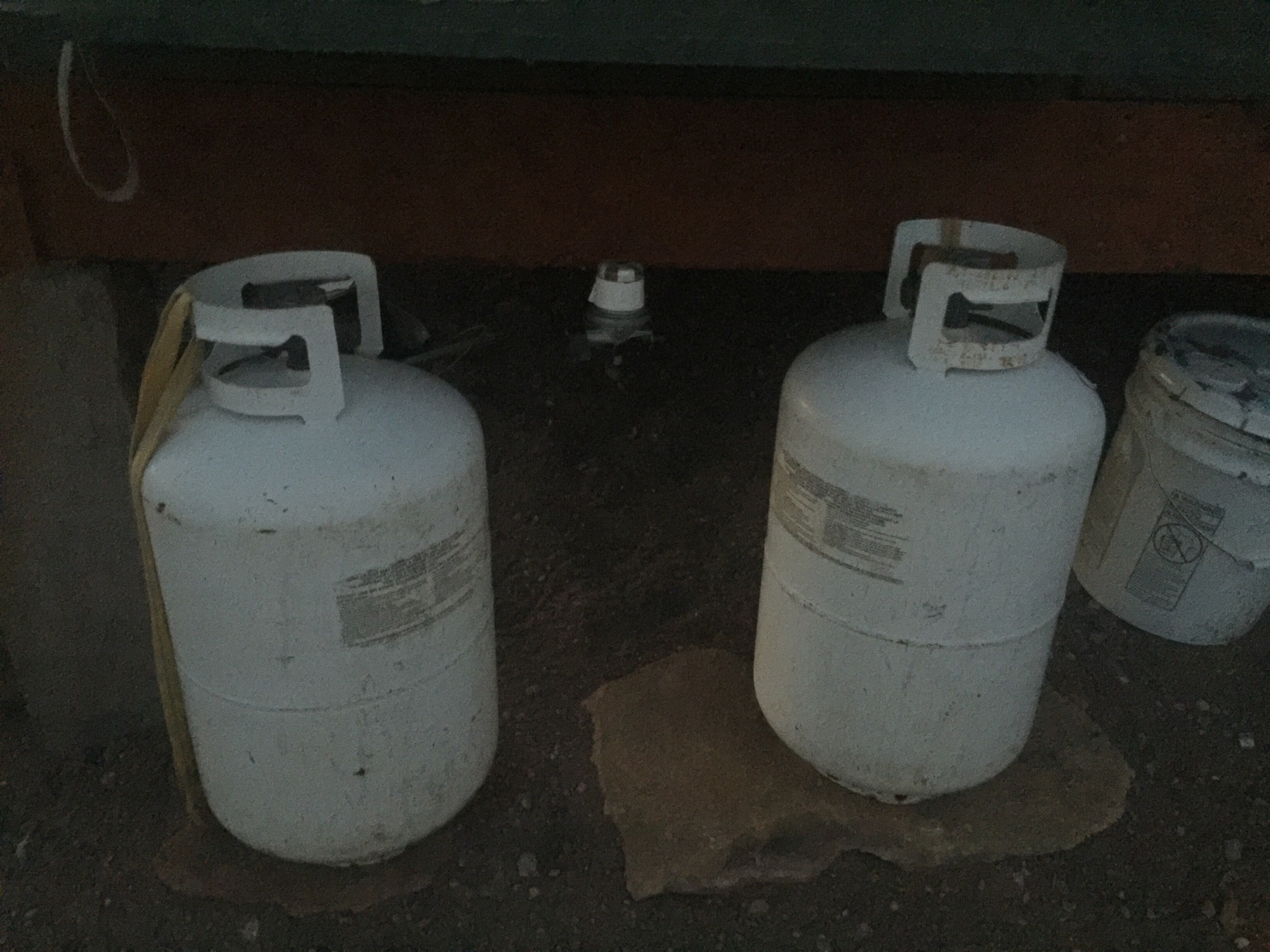
The pigtail hoses should finally arrive this coming weekend, which will finish the Lair’s transformation from the 19th to the 20th century. With this changeover regulator the heater will stop flaming out every time a bottle sucks dry – which of course it invariably does in the middle of the coldest night it can find.
Even though it’s still a few months before this thing goes into actual service I’m hot to get the new plumbing pressurized and leak-tested, and the pigtail hoses have been hanging fire for a couple of months now. I could have ordered them more quickly at the local hardware but decided to suck it up and wait because I can get better quality at lower costs online. But now at last we’re almost there, and that’ll be one more winter prep I can check off my list. 🙂













Joel – I have a natural gas emergency open flame heater in the basement for use when there is a winter power failure that lasts longer than a few hours. It does not vent to the outside, so is only used when needed to keep pipes from freezing in winter when power vanishes, Yes, also have carbon monoxide detectors for safety.
The valve to cut off gas is about 3 feet from the unit and has 1/2″ black pipe feeding it. When I need to use it after a very long time of no use, it takes several minutes for the air in the pipe and the flame box to purge before the spark will do anything to ignite the gas.
I suspect you have a similar issue and it takes some experimenting to learn how long your system takes to have more gas than air in the plumbing if not used constantly. This is for spark ignition.
If you have to have the open flame pilot, how to make sure it never goes out when operating. Maybe fabricating a galvanized sheet steel stirrup about 18″ wide and of equal radius to block side winds from the exhaust vent outside on the wall might help (a piece of old corrugated steel roofing would work).
I don’t recall if your heater unit has a battery powered thermostat controlled spark ignition option or not. If not, might be something to look into as an “add on” if unable to solve the pilot flame going out. Lastly, any thoughts of making a small trailer with permanent LPG tank to hitch to your jeep that holds say 100 gallons? Tow it, fill it, bring back and park. Good to heat and cook for a whole year or maybe more 😉 (that once a year bill might be a bit steep tho’). Good luck with the task.
Terrapod, there’s no question you’re right about air in the gas line: I fell for that a couple of times last winter when I couldn’t get the fire to light at all. When I fire it up for the first time this season I expect a lengthy process.
But that doesn’t explain why I can’t use the sparker at times when there should be no air in the line, or why the butane lighter’s flame often goes out the second I stick it in the firebox. It’s a mystery to me.
On the bright side, the pilot light has never blown out once it finally lit. It stays burning until I turn it off or it runs out of gas.
Out of curiosity, are the prevailing cold winds of winter from the north/northwest out there? Might explain why the firebox is so “breezy”.