Okay, so the Fortress of Attitude is really small. I put it in the only relatively level place available close to the cabin that wasn’t right where you’d never put up a fenced chicken yard. That place was small. Maybe someday I could make a bigger one, but I’d pretty much have to be in the chicken business at that point and after three years I don’t see that happening. Bottom line: The Fortress was built for half a dozen chickens by a guy who didn’t really know if it was adequate for that.

Now it’s got seven including a large male, and there’s a chance that will rise to eight. Yesterday I was cleaning out the coop and couldn’t any longer ignore the stink of manure. A chicken yard that smells like manure is a badly-managed chicken yard. I’ve used deep-litter composting for years, and it worked great for years with four or five hens. With seven, it’s overwhelmed. The straw in the yard is disgusting.
So today I brought home two whole new straw bales, and tomorrow I’m going to ruin the chickens’ day by forking out all the bedding in the yard. Haven’t had to do that…ever, actually. Usually I take out a wheelbarrow or so at a time when I want to cook up some soil in the raised beds, but other than that it breaks down on its own into lovely near-humus. Or it did. Now it’s just rotten straw soggy with fresh chicken shit. I’ve clearly reached the limits of deep-litter composting, and it’s time to concede defeat.
On the other hand, I’ve never lost a single bird to a single predator, so I’m still winning on that score. He said quietly,…










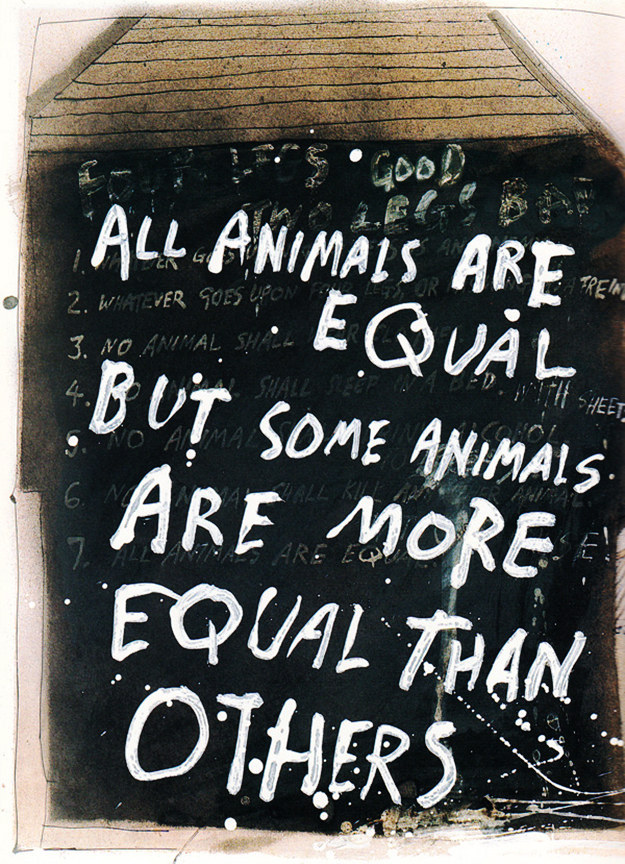




Well, you always have the option of figuring out who your best layers are, and deciding out if you really want to keep that rooster, and then eating your way out of that little problem.
Wonder how much more a bale of hay would be than the straw. Straw is little more than cellulose. The chickens will eat quite a bit of the hay, especially if you can get alfalfa or even sudan grass that has gone to seed. Oat hay is just more straw unless it is heavy with grain.
I never used straw myself, only the hay the goats, cows and horses wasted. It is far more dense, and has a lot more nutrients in it, for both the chickens and the soil.
But yeah, you’ll need to clean it all out once a year or so in any case if there are many chickens on it.
How is that straw breaking down for you in your beds, Joel?
I’ve never seen buried straw decompose fast enough to merit its use as compost. I’ve assumed that people who recommend it live in areas where there’s more moisture and a more aggressive microbial community.
If I had that big pile of horse manure you’ve mentioned I’d be likely to use that for composting in the beds – along with some perlite (expanded gypsum) to keep it from compacting too much – and let the straw decompose somewhere off in a pile (mixed 50/50 w/ horse manure) and then add it to your beds as finished compost. We generally don’t get so much rain in this region as to turn horse manure into a sludge. Here you generally have to deliberately keep it wet in order for it to compost.
PNO, the straw needs to be as broken down as you want it before you remove it from the chicken yard. Straw and chicken shit seem to be mutually destructive, but once the straw is in the bed to be mixed with soil I’ve never seen it break down any further. From then on it’s just there for lofting.
Thanks for the details, Joel. I was just kind of imagining your waiting for buried straw in your beds to turn into that rich soil one would want – and waiting…
Sounds like you’ve got a handle of how it works for your situation. It makes sense that it would decompose better in the coop or piled – better moisture retention and the bacteria the manure provides. That foul smell when it gets too thick is probably a sign of anaerobic bacteria getting involved in the decomposition process – it’s a fine line there sometimes balancing how things will compost.
Btw – if you ever decide to try perlite for breaking up your soil and giving it some moisture and oxygen retention – it’s a lot cheaper via a building or masonry supply outfit – $20 for 6 cu ft vs a little bag for $10 at a nursery. Works just as well – a pain to store but gives good results.
Composting worms in your compost pile and your garden soil really make a difference too. They require a bit of attention – mostly keeping their environs wet enough – but they’re cheap labor – continually tilling and breaking down your soil and compost so’s the plants can use it.
It would be interesting to try and introduce composting worms to the chicken yard. If they could get established – and that’s a big ‘if’ – they’d do wonders for the process and provide a treat for the birds. You’d have to do it in a spot near their litter but where the birds can’t quite get at – under the coop or such. Places that sell bait call the worms “red wrigglers” or similar – probably about $4 for a box with 50. Coffee grounds are an easy food for them that they seem to like – and it’s as easy to kill ’em as it is to keep them alive. I started with a couple dozen about 10 years ago – they’re all over the place here now – working ceaselessly – unlike myself…