I can’t keep the jargon straight, and I finally came to the conclusion that either economists or I didn’t understand who was supposed to be doing what to whom, and I’m pretty sure it wasn’t me that was wrong.
[digression]By that I mean that formal “economics” seems to be about the many times and ways a government is supposed to interfere with an economy, rather than the actions of the actual economy itself. It’s like, once I was a technical training developer, which means exactly what it sounds like, I developed technical training courses. But there’s this academic specialty called Instructional Design, and you couldn’t call yourself an Instructional Designer unless you had a master’s degree in ID, and then people were supposed to pay you Big Bux. Only ID turns out not to have one damn thing to do with actually, you know bringing training materials into existence. It’s just a study of conflicting theories about how to do that. Wildly wrong-headed theories, in my experienced but uneducated opinion. The only thing ID ever actually sold in the market was jargon. As a department manager I hired a few IDs, because my bosses kept saying we needed one on staff. I also eventually fired exactly that many, because experience always proved that we didn’t. It’s a pet peeve of mine, and I’ll shut up now.[/digression]
And maybe it’s my confusion that’s got me so conflicted about this story…
Food stamps are paying for trans-Atlantic takeout — with New Yorkers using taxpayer-funded benefits to ship food to relatives in Jamaica, Haiti and the Dominican Republic.
Welfare recipients are buying groceries with their Electronic Benefit Transfer (EBT) cards and packing them in giant barrels for the trip overseas, The Post found.
The practice is so common that hundreds of 45- to 55-gallon cardboard and plastic barrels line the walls of supermarkets in almost every Caribbean corner of the city.
On the one hand, I get it: At a very basic subsistence level, everything that isn’t nailed down acts like air pressure: It moves from where it’s plentiful to where it’s rare, in exchange for other, often completely unrelated, considerations. Except for the part about using other people’s money to do it, that’s high desert finance in a cartridge case. And so, except for the OPM factor, which I find contemptible if understandable, this story kinda warms the cockles of my heart – especially the part where fedguv bureaucrats hate it.
Hence my feelings of conflict.
I should start a journal with examples of high desert finance; I’ve been mulling a great one that happened recently.










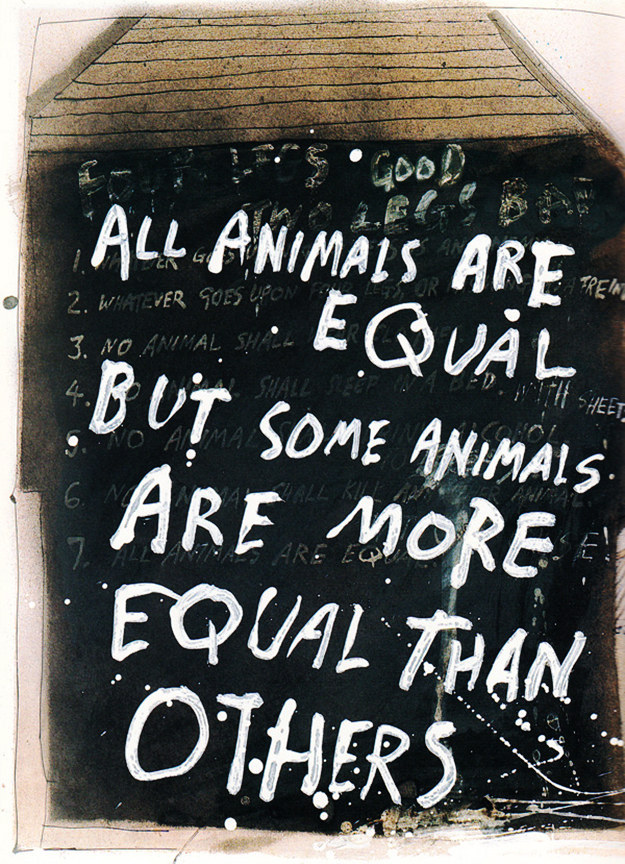




“I should start a journal with examples of high desert finance”
Oh, please do! You’re the only person I know who could write about economic matters without putting your entire readership to sleep. Might even entertain us.
Besides … you know that could actually turn into a charming booklet that might do for free-market econ what your little solar power book does for DIY electricity.
Indeed, the “other people’s money” part destroys any warming of the heart for me. The fact that the bureaucrats hate it is fun, however.
But I’m seriously wondering about the cost of shipping those barrels. It would not be cheap, to say the least, and one would think that money alone would buy a lot of groceries in most of those countries.
This story seems to need a little more investigation. And, of course, the “food stamp” nonsense needs to be eliminated. I know, I know… in my dreams.
The shipping would probably be prohibitively expensive except for two considerations: First, neither the shippers nor the recipients are paying for the contents. The taxpayers are. So the only real costs are shipping and the barrels. Market distortion at its best. Second, the barrels themselves are commodities. Unlike cardboard boxes, plastic barrels have real value.
In addition to getting a really cool plastic barrel (which is as useful as a wooden pallet) the recipient also gets food in it. It is concievable that the recipient of said food barrels are sending money for the purchases. The shipper keeps the cash, uses food stamps and makes money the government does not see. In some circumstances money might not beenough to buy food in deep poverty places. Sometimes there is little or nothing to buy. Sometimes inflation is so rampant that it takes buckets of failed fiat currency to even buy dry beans. If any of the food being shipped is not eaten it could be used for barter or to stock the shelves of stores in the receipient countries.
Joel, just in case you ever feel like your digressions go unnoticed:
I suspect it was on a smaller scale, but your ID story hits me right where I live. For a time I was working at a small software automation company struggling either to make it big or to get bought. We got pretty lean from layoffs, and out of a training team of 8 when I joined, it came down to just me before IBM finally gifted us the latter. For nearly two years at the small outfit I conceived, architected, designed, wrote and delivered all the technical courses myself, and during much of that time the product was changing so fast that I essentially had to do all of this for every delivery. (Not exactly a recommended practice for personal health, but I did get pretty good at it; IBM didn’t start watering down the courses for nearly two years after the acquisition, which according to lots of happy students is distinctly not SOP.)
Through all that, d’ya think I had any flippin’ clue what an “Instructional Designer” was?
I first saw the term when I was looking for work at a later time (not being cut out to be an IBMer for the long haul), and when the question came up about my having the skill, it seemed obvious enough that I did, and fortunately the “hiring committee” (the academic world has a “hiring committee” for every single job posting) could see that enough to hire me despite being an obviously unwashed vulgarian.
Then, of course, I learned that there was a whole degree for such a thing, and I learned about the Big Bux arrangement. (You know, the whole “you can, too, if you work at it” thing.) I further met a few people that had such papers, and concluded that they knew a lot of terms for things, and very little about how to put things together without them. (Fortunately, private-sector work became available again eventually, and I took it to begin healing my trampled sense of irony.)
Needless to say, I found your digression to be charmingly relevant–and nuts-on. 🙂
Re; the nothing to buy with money…
I’ve worked in Africa (which should be something of a guide for the Caribbean – as europen culture is for North America).
Those places have laws for everything and anything, and if a cop sees a laden truck, he can always pull a new law out of his arse to get a fine or a donation out of the driver and the cargo. same for shops.
African cultures also seem to have a perverted sense of entitlement to charity:
“you have two tomatoes, I (who am to lazy to plant any) have none, I am poor you should help me (to remain lazy and poor)…”
which works as a great incentive never to have more than you need for yourself.
A cop’s argument also usually goes along the lines of “you have more than you need…”
In Africa and I’m guessing in the Caribbean too, what you can buy tends to be very expensive.