
My older brother sent me a replacement display for my inside voltage monitor, which is a good thing because when it came back to life it lasted less than a day. So that’s working well again.
Makes me sad at the moment, though, because it’s only five in the afternoon and I’m already down from peak regulated voltage. Which means it’s official, the days are getting shorter. It took five winters in that old RV trailer – actually it took substantially less than that – to make me start mourning the summer while still in August. I don’t recall that it ever bothered me that much when I lived in Michigan. I grew to hate winter sometime around December, but didn’t let it ruin my summers. Of course back then I didn’t build my own shelters and heat with wood. Truth is, though, I’m kind of looking forward to seeing how much of an improvement the new siding is at holding in the heat.
Mostly though, it’s hot, my chores are done, and I’m inside hiding from the sun and playing with this new camera…
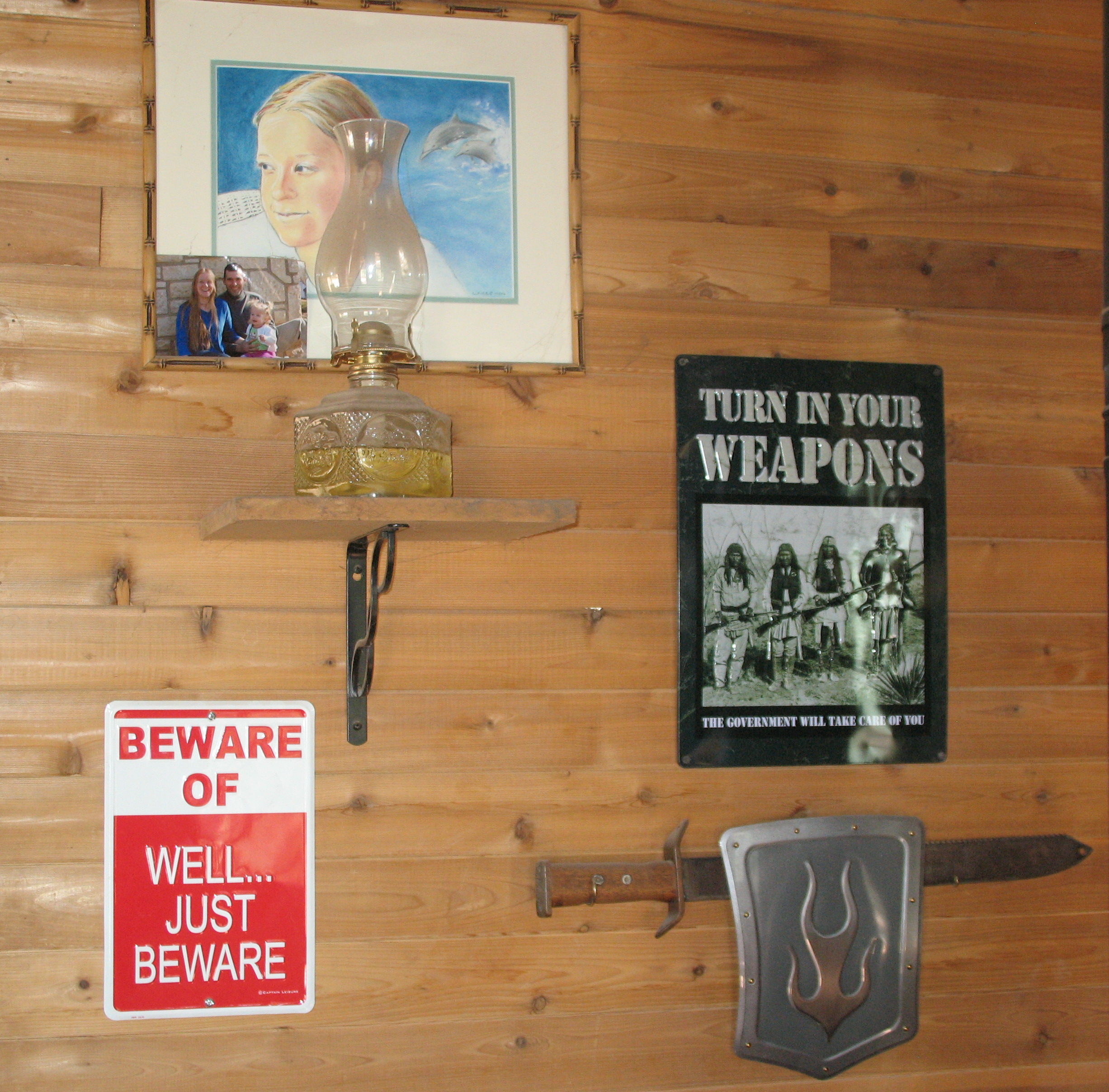
First camera TUAK ever had, as I recall, was donated by a commenter that went by Canadian Momma whom I haven’t seen here in years. It was the first digital I ever got to play with – I’ve never exactly been Mr. Cutting Edge of Technology – and I was astounded by the resolution you could get on that thing. It’s been long enough that I’m enjoying that bit all over again.















OK you have two inverters plus your DC system. So does that make that your kerosene lantern “Plan D”, or do flashlights figure in there somewhere?
;D Flashlights are always part of every plan.
But yeah, I guess kerosene has been demoted to Plan D. OTOH, the inverter is the only part of the power system with 100% redundancy and it’s hardly the only part that can fail, so…
I know the winter and consistent cold temps will make seeing if the siding keeps heat in better, but shouldn’t it also affect how fast the place heats up in the daytime after having cooled off overnight too? I suppose open windows for ventilation and variable temps would make comparison a bit more nuanced but still …
Paul B, with windows open on all sides for ventilation, I’d have thought the indoor temperature would probably track the outdoor temperature pretty closely in such a small cabin regardless of how thick the walls are. Turns out not to be so, though. The walls, roof and high ceiling space hold more heat than can be lost overnight. In the morning, with windows open all night, it’s still typically ten degrees warmer inside than out. And in the evening the cabin stays hot and stuffy long after the desert has cooled unless there’s a good stiff breeze through the windows. I suspect that’s the high ceiling working against me, but really don’t know. So my ability to passively cool a small stick-built cabin is limited even with all the big windows open in every direction. Thermal mass can be a blessing in a large structure with really thick walls, but it’s no help to me in summer. It’s complicated, but the bottom line is that it’s hot except in late night and early morning.
Winter is simpler to figure out. The cabin is closed up all season and there’s only active heating and passive heat loss going on. Up till now the heat loss has worked all too well.
I suspected that would be the case.
Thinking of winter, you did caulk the window and door edges and any other cracks, joins or holes? even in the OSB? If your cabin were a barn, it would have a cupola to vent the heat in summer. Sealable vents – there are such things – on both sides up high would do the same thing for you. Probably a job for next spring, done by a neighbor who doesn’t mind heights, but just saying…
From the looks of things, it appears you have very little ventilation area up in the high ceiling area . . . right where you sleep. Convection says that hot air rises, but in your case it has very little means of escape. You really need some additional ventilation provision right up there at the peak, either in the roof itself (somewhat difficult to install/control) or as window types in the high (south?) wall.
We shoulda thought of this during the siding project.
The loft has two small vent windows but they only work well when there’s a breeze from the west. Bigger windows would become a curse during storms, of course. The big rains never come down vertical. Most of the time I can leave these open and not flood the loft. I’ve thought about a roof vent but don’t know how I’d ever seal it, what with the corrugated roofing.
Most of the time what I have is good enough. It gets hot in here some summer afternoons, but I’d rather deal with that than rain or cold.