If you’re rigging a solar-powered electrical system for an off-grid home, it has become entirely practical to use lighting that bypasses the need for an inverter. In fact it’s so seamless as to almost be a problem; I have 12-volt DC and 120-volt AC LED bulbs that all fit the same socket, and some of the Chinese ones aren’t even labeled. So I have to carefully label the spares I have in storage.
This 12-volt residential LED business is relatively new. I went with all AC lighting when I first wired the cabin because the only DC lighting I was familiar with was automotive. And even then, as late as 2009, I had to go with CFLs because anything LED was out of my league.
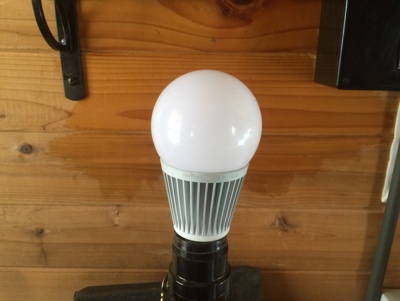
Since then non-dimmable LEDs have come way down in price. The one big promise we were made 10-15 years ago was incredible longevity, and so far that has not been my experience. Your typical screw-in LED ‘bulb’…
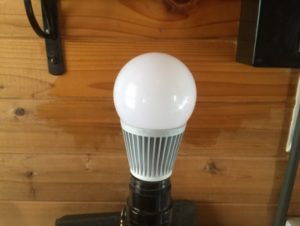
…doesn’t have any better overall longevity than an old-fashioned incandescent. So you do have to stock spares. But LEDs are a helluva lot easier to live with than CFLs and lately the prices are bearable.
CFLs use roughly half the power of comparable incandescents, and LEDs use about half the power of comparable CFLs, which makes LEDs the only way to go for a small solar power outfit. And if you really want to get stingy with your power output, dimmable LEDs are your friend.
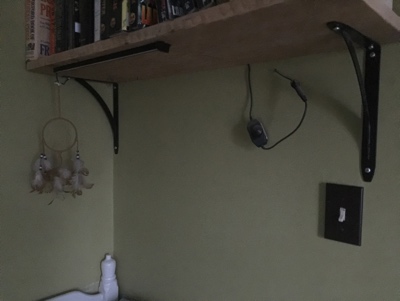
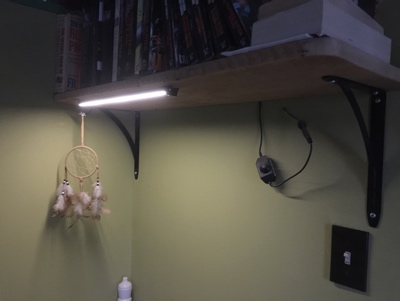
The real price difference these days is between dimmable and non-dimmable, so you have to choose your application. If you’ll never want to dim that light, spending the money there doesn’t make sense. All the lighting in the bedroom addition is 12 volt LED but this is the only dimmable one, a gift from Big Brother 3 years ago for the new bedside…
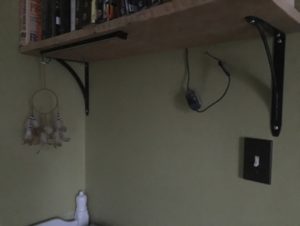
…and you can clearly see the obsessively professional manner in which I installed the dimming rheostat. This light has seen three winters and two summers so far, still works great, and more and more the rheostat is irrelevant because I virtually always keep it cranked low – just bright enough to light up that corner without blinding me first thing in the morning.
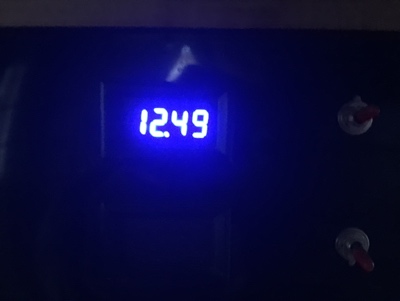
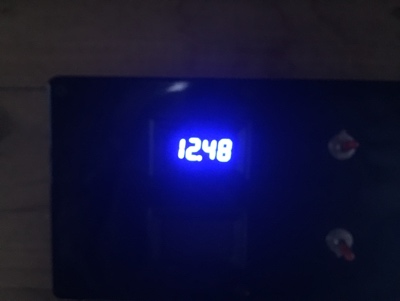
To my shock I frequently don’t even bother turning it off during the day and normally that would be a sin against the power system. Yesterday morning I noted the early-morning battery readout with no load at all. It was getting light but there wasn’t any push yet from the solar panels…
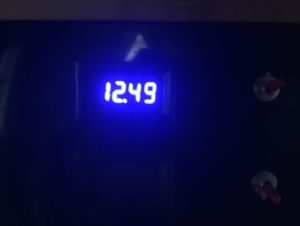
…and then I turned the light on…
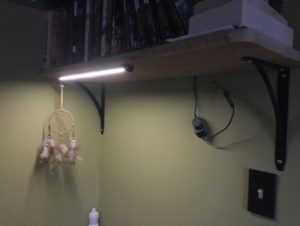
…and it – eventually – had the following startling effect on battery voltage…
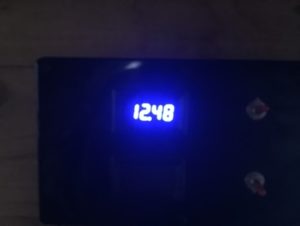
Actually at first there was no effect at all. In terms of power usage, when turned way down the thing is practically free.
In fact using it is so painfree that, as I said, it has lulled me into bad habits since I often don’t bother turning it off during the day, and even though it’s cranked way down that’s probably bad for its longevity. It’s a really nice little lamp and I don’t know what it would cost to replace.