Women and minority amputees hardest hit.
Yeah – okay, sorry. Too much time with NPR on the Jeep radio. Hey, I’ve been painting a lot. It’s either talk radio or beer.
I’ve been replenishing my stump socks and assorted prosthesis-related textile products a little at a time, about once a month. So far my biggest purchase has been just on the sunny side of $100 so I’m not keeping amputeestore.com in business or anything, but since I’ve recently become a regular customer I do seem to have also become a favorite of whatever bot handles their spam. And so now I have access to articles about prosthetics, often hawking products I never knew existed.
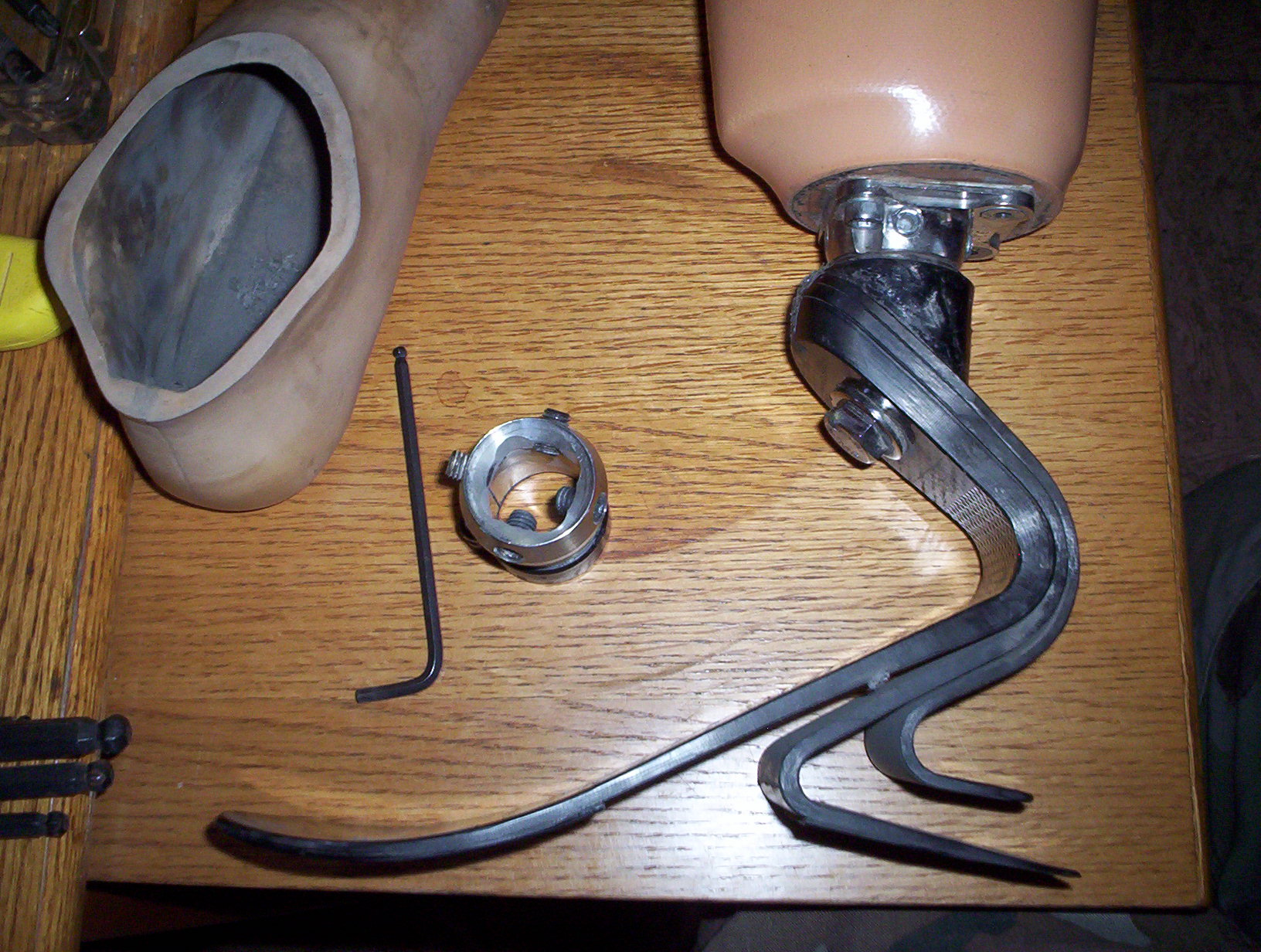
Okay: My current prosthesis turned 20 either this year or last, I can’t quite recall, and was old-fashioned even then. It was around then that styles in prosthetic design took a sharp turn away from the “make it look like a meat leg” aesthetic and you started seeing pictures of veterans walking around on titanium pegs and runners with bizarre feet that kinda made them look like these guys – and while they were probably a big technical improvement in terms of mobility, it just wasn’t me. I got my first leg in the early seventies, and to me a prosthesis that looked like a pitifully bad imitation of a human leg was what a prosthesis was supposed to look like. So when the guy asked me “exo or endo,” I went with what I was used to. This was a big tactical error. I didn’t know I’d be keeping that leg for what’s starting to look like the rest of my life, and I didn’t know everybody was just going to stop making replacement parts for that style of leg as the industry cheerfully romped off in the direction of “Let’s make them all look like erector sets.”
To be perfectly honest, I wasn’t even aware there was that much of an industry. I had kind of gotten the impression – not really based on any hard evidence – that prosthetics was a shrinking if not dying field. Think about it – they used to whack off arms and legs for all sorts of things. Fifty years ago there wasn’t anything the least bit unusual about running into an amputee. But improvements in cancer treatments and orthopedic surgery seemed to be moving away from that.
Maybe it was the use of unarmored Humvees in the Forever War that turned that trend around, I don’t know. But as I said, around the time this leg was made I started seeing ads for some strange, unfinished-looking legs and that’s just the way things have been for 20 years or more. And that seems to have spawned a whole market in odd devices, primarily feet.
In 2008 my own leg was re-jiggered to accept a much newer style of foot…
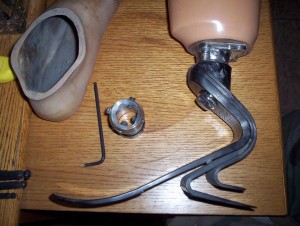
Call me a wuss, but after 45+ years this still kinda creeps me out.
…and it still looks weird to me, even though it’s a huge improvement over what it replaced. But that was ten years ago, and it appears fashion trends are still evolving. Hence, this bit of spam that arrived in the morning email…
Top Reasons You Need to Use the Correct Foot Bumper or Wedge
If this has been your experience, then odds are, you may have the incorrect foot bumper or need a wedge added or removed. Read on, because we are going to be showing you the top reasons why you need to use a correct foot bumper or wedge, why it is so important and what you should expect. But before that, for those who are new to this whole prosthetic thing, let’s go into what a foot bumper and wedge is.
That last bit is just a teeny bit insulting. I’m definitely not ‘new to this whole prosthetic thing,” but it’s clear I haven’t been keeping up. Because the next illustration shows me something I’ve never seen before, or even close to what I’ve ever seen before.
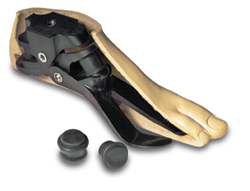
The only similarity between that and what I’ve been using for ten years is the foot-shaped object that covers it like a sock. That’s not even the terminator foot they were trying to sell me a week or two ago. I don’t know what that is, but I know it needs bumpers and wedges.
They also sell wedges for my style of foot…
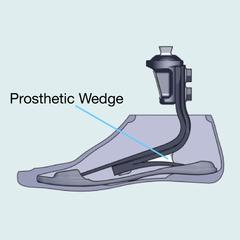
…but that is presented in the article as so last decade.
And I guess where I’m going with this is that, while I’m happy people are still tinkering with the technology, and in my experience at least some of it is true improvement, does all this style-as-progress mean there are just a lot more amputees out there than I perceived? I wonder how many of these folks are getting their extremities blown off? Because I can tell you from similar personal experience, that blows.